While this particular observational consideration is not part of my upcoming book NeuroMythology, it is representative of just one of the types of written passages that you will find in it when it is released May 1st of this year. I include it here to prepare you for the mind-blowing connections which will be waiting for you within its pages. Remember, “Consciousness is divine!”
When strength kneels before continuation
In the still hours before dawn, across traditions separated by thousands of miles and centuries of distinct cultural development, human beings told stories about a peculiar phenomenon: power that chooses to serve rather than to rule. These stories emerge not from accident but from something the psyche recognizes as fundamentally true. Strength divorced from purpose becomes mere destruction. But strength aligned with the continuation of life, with the protection of potential, with the forward movement of consciousness through time, becomes something else entirely. It becomes sacred.
Two figures from vastly different mythological traditions illuminate this principle with remarkable clarity: Hanuman, the devoted monkey warrior of Hindu tradition who carried an entire mountain to save a dying prince, and Rhea, the Greek Titaness who deceived her child-devouring husband to preserve the future of the cosmos. On the surface, these figures share little. Dig beneath that surface, and you discover that both answer the same fundamental question that every conscious being eventually confronts. What preserves life when the forces of entropy, consumption, and destruction seem positioned to win?
The answer both traditions provide may surprise you. It is not superior force. It is not cleverness alone. It is devotion, that quality of attention and love that refuses to accept the apparent inevitability of loss.
The mountain as threshold between orders of reality
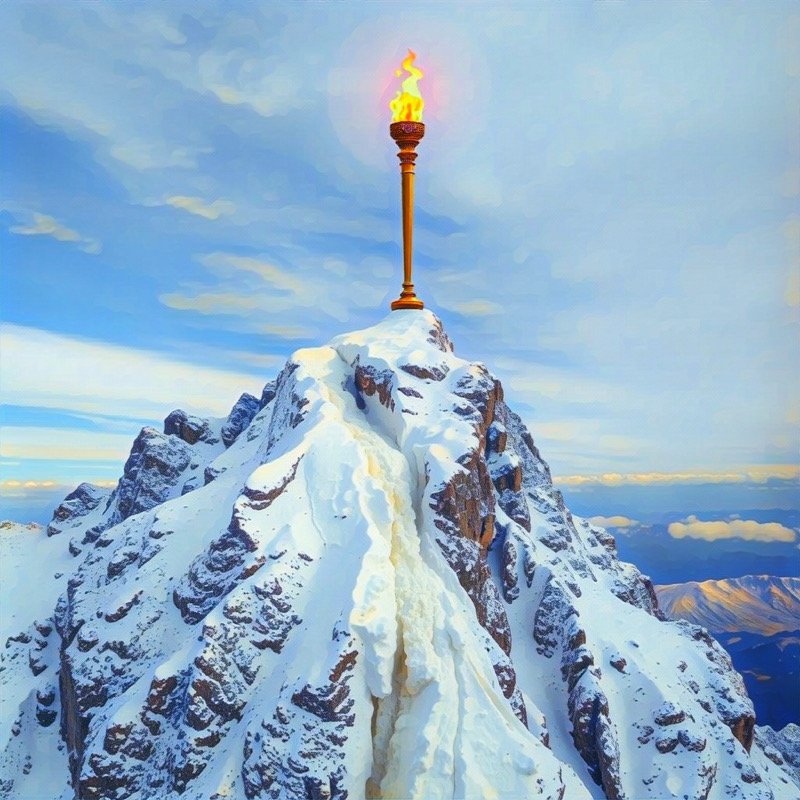
Mountains occupy a peculiar position in the human imagination. They are the places where earth reaches toward heaven, where the solid ground of ordinary existence stretches upward into the realm of clouds, storms, and celestial bodies. Nearly every ancient culture positioned its most sacred events on mountains or understood mountains as the dwelling places of gods. Moses received the tablets on Sinai. Zeus ruled from Olympus. Shiva meditates eternally on Kailash.
This is not arbitrary symbolism. Mountains represent the threshold between what is and what could be, between the manifest world and the realm of pure potential. To move a mountain, then, is not merely a feat of physical strength. It is an act of rearranging the boundary between the possible and the impossible.
Hanuman’s journey to Mount Dronagiri emerges from desperate circumstances. Lakshmana, the brother of Lord Rama, lies dying on the battlefield, struck by a weapon that can only be countered by the Sanjeevani herb growing on this distant peak. Hanuman flies to the mountain but cannot identify the specific plant among the countless species covering its slopes. Time presses. Every moment brings Lakshmana closer to death.
In this impossible situation, Hanuman makes an impossible choice. Rather than search endlessly for the one herb he needs, he lifts the entire mountain and carries it back to the battlefield. The image should strike us as absurd. A monkey, however divine, carrying a mountain through the sky? Yet the psyche recognizes something true in this absurdity. When devotion is complete, when the self has been entirely surrendered to a purpose greater than personal survival, limitations that seemed absolute reveal themselves as negotiable.
Rhea’s mountain story takes a different form but emerges from the same desperate necessity. Kronos, her husband and the Titan of time, has received a prophecy that one of his children will overthrow him. His solution is straightforward and horrifying: he swallows each child as it is born. Hestia, Demeter, Hera, Hades, Poseidon, one after another, disappear into his belly. Time consuming its own offspring. Entropy devouring potential before it can manifest.
When Rhea becomes pregnant with Zeus, she flees to Mount Ida in Crete. There, in a cave on the sacred mountain, she gives birth and immediately enacts her deception. She wraps a stone in swaddling clothes and presents it to Kronos, who swallows it without inspection. The mountain becomes the site where the future hides from the present, where potential escapes the devouring mouth of destructive time.
Both mountains serve as thresholds where the impossible becomes possible. Hanuman’s mountain moves through space; Rhea’s mountain conceals the child who will move through time to overthrow the old order. In both cases, the mountain is not merely setting but participant, not merely backdrop but actor in the cosmic drama of preservation.
Devotion as the quality that bends natural law
Consider what Hanuman’s feat actually requires. He must fly faster than death approaches. He must lift weight that should be immovable. He must maintain focus and determination across vast distances while carrying an impossible burden. How does he accomplish this?
The Hindu tradition is explicit: Hanuman succeeds because his devotion to Rama is complete. There is no separation between Hanuman’s will and Rama’s purpose. When the self has been entirely offered in service to something greater, the apparent limitations of individual existence become transparent. The ego’s boundaries, which normally constrain what we believe possible, dissolve in the presence of total devotion. What remains is not weakness but rather strength freed from the friction of self-concern.
This principle appears across contemplative traditions. The Zen master who performs impossible calligraphy does so by getting out of his own way. The athlete who achieves a personal best often describes a state of egoless flow. The parent who lifts a car off a trapped child taps reserves that ordinary self-preservation would never unlock. Devotion, it seems, grants access to capacities the defended self cannot imagine.
Rhea’s devotion takes a different form but operates by the same principle. Her love for the child she carries overwhelms her fear of Kronos. A being capable of swallowing gods should inspire paralyzing terror, yet Rhea acts with clarity and cunning. She finds the mountain refuge. She orchestrates the deception. She arranges for the infant Zeus to be raised in secret by nymphs and protected by the Kouretes, whose clashing shields mask the baby’s cries.
Where does this courage come from? The tradition suggests that Rhea, as the generative flow of time itself, embodies a force more fundamental than Kronos. He represents time as consumption, as entropy, as the process by which all things are eventually destroyed. She represents time as creation, as the continuous emergence of new possibility, as the river that brings rather than takes away. Her devotion to her child is simultaneously devotion to this generative principle itself. In protecting Zeus, she protects the future’s capacity to differ from the past.
Both figures demonstrate that devotion is not merely emotional attachment but a quality of attention so complete that it reorganizes what is possible. Hanuman’s love for Rama makes mountains light. Rhea’s love for her children makes deception of a Titan achievable. In both cases, the devoted heart accesses resources unavailable to the calculating mind.
Time’s two faces: consumption and generation
To understand why these myths resonate so deeply, we must grapple with a fundamental tension in human experience: time destroys everything, and yet time is also the medium through which everything new emerges.
This is not a contradiction to be resolved but a polarity to be held. Every moment, existing forms dissolve. Every moment, new forms arise. We experience time as loss when we identify with what is passing away. We experience time as gift when we identify with what is coming into being. Both experiences are accurate; neither captures the whole truth.
Kronos represents the first face of time, the aspect that ancient Greeks understood with clear-eyed honesty. Everything you love will end. Your body will fail. Your achievements will be forgotten. Your civilization will crumble into dust. This is not pessimism but simple observation. Time devours its children. The future consumes the present, which consumed the past.
Rhea represents the second face of time, less obvious but equally real. Every ending enables a new beginning. Every dissolution creates space for fresh emergence. The nutrients released by decay feed new growth. The energy dissipated by one system becomes available to another. Time generates as ceaselessly as it destroys.
The crucial insight these myths encode is that the generative face of time can only continue its work if something protects potential from premature consumption. Seeds must survive winter. Children must reach maturity. Ideas must be nurtured before they can change the world. Without this protection, the devouring aspect of time wins by default. Everything returns to undifferentiated chaos, and no new order can emerge.
This is why Rhea’s deception is not merely clever but cosmically necessary. By hiding Zeus, she ensures that the generative principle will have its champion. The old order of the Titans, which has become sterile and self-consuming, will eventually give way to the Olympians, who represent a new configuration of cosmic forces. Time will continue, but it will continue as creation rather than mere entropy.
Hanuman’s mountain carries a similar implication. By saving Lakshmana, Hanuman ensures that Rama can complete his mission, defeat Ravana, and restore dharmic order to the world. The healing herb represents the generative aspect of nature, its capacity to repair and restore. Carrying the entire mountain rather than a single plant symbolizes something important: when you serve the generative principle truly, you do not economize. You bring everything that might be needed, even if it seems excessive.
The psychology of protective devotion
These mythological patterns correspond to something we can recognize in our own psychological experience. Each of us contains both Kronos and Rhea, both the devouring aspect that consumes potential and the generative aspect that protects and nurtures new growth.
The inner Kronos shows up as self-sabotage, as the harsh critic who swallows nascent creative impulses before they can develop, as the part that would rather maintain a familiar misery than risk the vulnerability of change. We have all experienced moments when something new was trying to emerge in us, a creative project, a relationship, a way of being, and we swallowed it before it could threaten the existing order of our lives.
The inner Rhea shows up as the protective instinct toward our own becoming, the part that knows some things must be hidden and nurtured in secret before they are strong enough to survive exposure. She is the wisdom that recognizes not all growth can happen in public, that some transformations require the shelter of the mountain cave before the new configuration can withstand the devouring gaze of the old order.
This psychological dimension helps explain why these myths feel so alive across millennia. They are not merely stories about distant gods but maps of processes occurring within consciousness itself. The battle between Kronos and Zeus is fought in every psyche that struggles to allow genuine transformation. The devotion of Hanuman toward Rama mirrors the devotion required to serve our own highest possibility against the parts of us that would prefer comfortable stagnation.
Research in developmental psychology supports this reading. Genuine psychological growth typically requires what researchers call a “holding environment,” a protected space where new capacities can develop without premature challenge. The infant needs the mother’s protective care. The student needs the teacher’s patient guidance. The creative project needs the artist’s fierce protection from internal and external critics. In each case, something like Rhea’s function must be performed: potential must be sheltered from forces that would consume it before it matures.
Strength that kneels, power that serves
Perhaps the deepest correspondence between Hanuman and Rhea lies in what they reveal about the nature of authentic power. Both possess enormous strength. Hanuman can leap oceans and move mountains. Rhea is a Titaness, one of the primordial forces that shaped the cosmos. Yet neither uses this strength for personal dominion.
Hanuman’s power exists entirely in service to Rama. When not engaged in devoted action, he waits quietly, almost invisible. He does not seek recognition or reward. He does not build kingdoms or accumulate wealth. His strength is a pure instrument of a purpose greater than himself.
Rhea’s power similarly serves the continuation of cosmic order rather than personal aggrandizement. She does not seek to rule. She does not challenge Kronos directly. Her victory comes through nurturing what will eventually transform everything. Her power is fundamentally generative rather than dominative.
This contrasts sharply with modern cultural assumptions about power. We tend to imagine that true strength manifests as control, as the capacity to impose one’s will on others and on circumstances. The myths suggest something different: the highest expression of power is not control but contribution, not dominion but devotion.
This principle applies at every scale of existence. The healthiest cells in a body are not those that accumulate the most resources for themselves but those that contribute most effectively to the organism’s flourishing (cancerous cells, by contrast, are characterized by their refusal of this devoted service). The most generative members of a community are not those who extract the most for themselves but those whose contributions enable the whole to thrive.
Contemplative traditions have long recognized this truth. The Taoist sage leads by serving. The bodhisattva postpones personal liberation to aid all sentient beings. The truly realized person has nothing to prove and nothing to protect, having discovered that authentic power flows through rather than residing in the individual self.
What preserves the future when the present consumes
We return to the question these myths answer: what preserves life, potential, and consciousness when entropy and consumption seem positioned to win?
The answer is devotion, but not devotion as we typically understand it. Not devotion as mere feeling, mere emotional attachment, mere preference. Rather, devotion as a complete orientation of being, a quality of attention so total that it reorganizes what is possible. This devotion expresses itself through protective action (Rhea hiding Zeus), through sacrificial effort (Hanuman carrying the mountain), through the willingness to serve something greater than personal survival.
This devotion is available to each of us, not as an abstract ideal but as a practical capacity. We all have something we would carry mountains for. We all have some nascent potential we would protect against devouring forces if we recognized its value clearly enough. The myths do not describe distant divine dramas but rather possibilities encoded in the structure of consciousness itself.
The monkey who moved the mountain and the mother who saved the gods both demonstrate that the generative flow of time can be served, that potential can be protected, that the future need not be merely a repetition of the past. Their example invites us to consider what we might be devoted enough to protect, what mountains we might discover we can move, what new order we might be nurturing in the cave of our own becoming.
Consciousness is divine, these traditions remind us. And divine consciousness expresses itself most fully not in dominion but in devoted service to the continuous emergence of life, meaning, and possibility through time. The mountain moves when the heart is pure. The child survives when love outsmarts entropy. And the future remains open when someone cares enough to make it so.