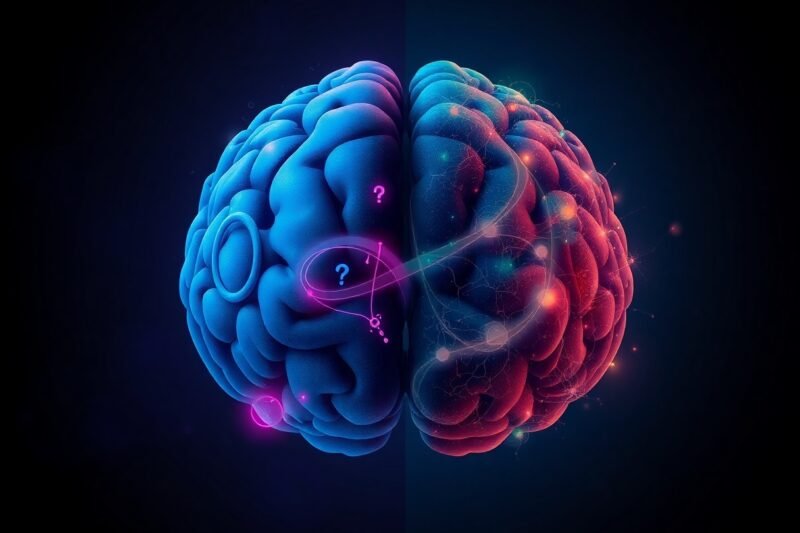
The old playbook for mental wellness centered on one thing: stability. A calm, routine-driven life was the gold standard. But here is the uncomfortable truth – the people thriving today are not the most stable. They are the most adaptable. That quiet ability to pivot, to release a thought pattern that no longer serves you, to see a problem from three angles instead of one? That is cognitive flexibility. And it might be the most underrated mental health skill of our time.
Think of your mind like a river. A rigid mind becomes a frozen lake – solid, predictable, but incapable of flowing around obstacles. Mental flexibility keeps that water moving, finding new channels when the old ones get blocked. This capacity to shift between concepts, adjust to new information, and release mental fixations is quietly shaping who manages stress well and who gets crushed by it.
Essential Cognitive Flexibility Exercises for Improved Mental Health
Building a more adaptable mind is not about reading self-help books on a beach somewhere. It is about practice. Deliberate, slightly uncomfortable practice that stretches your usual patterns of thinking. Here are the most effective approaches, ranked roughly by how quickly most people notice a difference.
1. Rule-switching and Task-switching Exercises
The Wisconsin Card Sorting Test has been a gold standard in neuropsychology for decades, and there is a reason researchers keep returning to it. The exercise is beautifully simple: you sort cards by one rule (say, color), then without warning the rule shifts to shape. Your job is to catch the change and adapt.
You do not need a clinical setup. Try this at home: play a card game with a friend and change the winning criteria every few hands without announcing it. Watch how your brain resists at first, wanting the old rule back. That resistance is the whole point. Push through it.
Digital versions like the Stroop test (naming the color a word is printed in, not the word itself) create similar mental friction. It feels frustrating. Good. That frustration is your prefrontal cortex doing pushups.
2. Mindfulness and Attention-shifting Practices
Mindfulness gets mentioned so often it has almost lost meaning. But strip away the incense-and-yoga-pants imagery. What mindfulness actually trains is your ability to notice where your attention sits – and then consciously move it somewhere else.
Here is a simple protocol that actually builds mental flexibility: spend three minutes with eyes closed, focusing entirely on the sounds around you. Then shift to physical sensations in your hands. Then your breath. The magic is in the shifting, not the sitting still.
Open-monitoring meditation (where you observe thoughts without engaging) proves particularly powerful for cognitive flexibility. You are essentially practicing non-attachment to mental content. A thought arises about tomorrow’s deadline. You notice it. You let it drift. Another thought appears about lunch. Same process. Over weeks, this trains your brain to hold ideas more lightly.
3. Perspective-taking and Empathy Building Activities
This one sounds soft. It is not. Deliberately stepping into another person’s viewpoint is one of the hardest cognitive tasks humans perform. Your brain prefers its own perspective – it is energy-efficient to assume everyone sees things the way you do.
Try this: the next time you disagree with someone, spend two full minutes articulating their position as if you genuinely believed it. Not a straw man version. The strongest possible version of their argument. It is almost physically uncomfortable if you do it right.
Reading literary fiction (not genre fiction, interestingly) correlates with improved perspective-taking abilities. When you spend time inside a character’s consciousness – especially one very different from you – your brain practices the gymnastics of holding an unfamiliar viewpoint.
4. Creative Problem-solving and Alternative Thinking Tasks
The “alternative uses” test asks a deceptively simple question: how many uses can you generate for a brick? Building material, sure. Doorstop. Paperweight. Now keep going. Self-defense weapon. Counterweight for a pulley system. Garden border. Keep going still.
This kind of divergent thinking stretches your cognitive flexibility directly. You are forcing your brain to abandon the obvious category and search for unexpected connections. The more uses you generate, the more you are strengthening those neural pathways that allow for mental pivots.
Set a timer for two minutes every morning. Pick a random household object. Generate as many alternative uses as possible before the timer sounds. Day after day this adds up. It is like compound interest for your adaptability.
5. Virtual Reality and Digital Training Programs
The newest frontier in cognitive flexibility exercises involves immersive technology. VR environments can create situations that demand rapid adaptation – you reach for a doorknob and suddenly the door is a window, or the floor becomes a ceiling.
But let us be honest: most people do not have VR headsets sitting around. More accessible are digital training programs specifically designed for executive function. Apps like Lumosity and Peak include task-switching modules that systematically increase difficulty as you improve.
Are these perfect? No. The research on “brain training” transfer effects remains mixed. But for building the specific skill of rule-switching and mental pivots, targeted digital practice does show measurable improvements in the short term. The key is consistency – 10 minutes daily beats an hour weekly.
Understanding the Neurological Basis of Cognitive Flexibility
Knowing why something works does not automatically make you better at it. But there is something grounding about understanding the machinery behind mental flexibility. It takes the concept out of the realm of personality traits and puts it squarely where it belongs: as a trainable brain function.
Brain Regions Involved in Mental Flexibility
If you could watch cognitive flexibility happening in real-time through a brain scanner, you would see a symphony of activity across the prefrontal cortex – that wrinkled mass right behind your forehead responsible for most of what we call “higher thinking.”
The dorsolateral prefrontal cortex handles the heavy lifting: maintaining current rules, detecting when those rules no longer apply, and signaling for a switch. Meanwhile, the anterior cingulate cortex acts like an error-detection system, flagging conflicts between what you expected and what is actually happening.
The inferior frontal junction is particularly fascinating. This region activates intensely during task-switching moments – that millisecond when you release one mental set and reach for another. People with damage to this area struggle profoundly with mental flexibility, even when other cognitive abilities remain intact.
Role of Executive Function in Adaptive Thinking
Executive function is the umbrella term for your brain’s CEO-level skills: planning, inhibition, attention control, and – crucially – cognitive flexibility. These abilities work together like a well-coordinated team.
Think about what happens when you are midway through one strategy and realize it is not working. First, your inhibitory control must suppress the ongoing action. Then working memory holds both the abandoned approach and potential alternatives. Finally, cognitive flexibility selects a new direction. Miss any step and you either persist with a failing strategy or freeze entirely.
This interconnection explains why stress hammers mental flexibility so hard. Stress hormones compromise prefrontal function generally, but inhibitory control often breaks down first. Without the ability to stop your current approach, you cannot pivot to a new one. You get stuck.
Neuroplasticity and Cognitive Training Benefits
The brain changes in response to how you use it. This is neuroplasticity. It is not just a nice metaphor – you can actually observe structural changes in the brains of people who practice cognitive flexibility exercises intensively.
London taxi drivers famously show enlarged hippocampi from navigating complex streets. Pianists develop thicker connections between motor regions. And people who regularly practice task-switching show increased gray matter density in the regions that support flexible thinking.
What drives me crazy is how often this gets oversimplified into “use it or lose it” platitudes. The reality is more nuanced. Not all cognitive challenges build flexibility equally. The most effective training involves variability – constantly changing demands rather than repeating the same challenge. Your brain adapts to specific demands, so variety is essential for generalized improvement.
Age-related Changes in Cognitive Flexibility
Here is the hard truth: cognitive flexibility naturally declines with age. The prefrontal cortex is particularly vulnerable to age-related changes, and flexibility often shows earlier decline than other cognitive abilities like vocabulary or general knowledge.
But decline is not destiny. The rate of decline varies enormously between individuals, and lifestyle factors play a significant role. Aerobic exercise appears protective. So does maintaining cognitive engagement, social connection, and novel learning throughout life.
The most encouraging research involves older adults who practiced cognitive flexibility exercises consistently over months. Many showed improvements that partially offset age-related decline. It is never too late to start strengthening these neural pathways, though earlier intervention provides more benefit.
Connection Between Working Memory and Flexible Thinking
Working memory and cognitive flexibility are like dance partners – each supports the other’s performance. Working memory holds multiple concepts simultaneously, which is essential when you need to compare an old approach with a potential new one.
Picture it like a mental desktop. If your desktop can only hold one document at a time, switching between tasks becomes impossibly effortful – you must fully close one before opening another. A larger working memory capacity means you can keep several options visible while deciding which to pursue.
This relationship cuts both ways. People with higher working memory capacity tend toward greater mental flexibility, but practicing flexible thinking also appears to expand functional working memory. Training one strengthens both.
Impact on Depression, Anxiety, and Stress Management
The clinical implications of cognitive flexibility might be the most important part of this entire conversation. Mental health struggles often involve getting trapped – in repetitive thoughts, in avoidance patterns, in narrow ways of interpreting events. Flexibility offers a way out of those traps.
Cognitive Inflexibility as a Risk Factor for Depression
Rumination – that stuck-record quality of depressive thinking – is essentially inflexibility made painful. The same negative thoughts circle and circle, and the mind cannot seem to shift attention elsewhere or generate alternative interpretations.
Studies consistently find lower cognitive flexibility scores in people experiencing depression compared to healthy controls. Whether inflexibility causes depression or results from it remains somewhat debated, but evidence increasingly suggests a bidirectional relationship. Getting stuck in negative thought patterns worsens mood, and worsened mood further reduces flexibility.
The therapeutic implications are significant. Treatments that specifically target flexible thinking (like cognitive-behavioral therapy’s emphasis on generating alternative thoughts) often outperform approaches that do not. Teaching someone to notice a negative thought and then generate three alternative interpretations is essentially flexibility training in clinical form.
Relationship Between Mental Flexibility and Anxiety Symptoms
Anxiety involves a different kind of stuckness – an inability to shift away from threat-focused thinking. The anxious mind locks onto potential dangers and cannot release them, even when the threat is unlikely or the worry is unhelpful.
Worry itself is inflexible. Notice how anxiety often involves the same fears repeating, the same catastrophic scenarios playing out. Mental flexibility exercises can interrupt this pattern, not by trying to stop the worry directly, but by strengthening the brain’s general ability to shift attention and update beliefs.
Intolerance of uncertainty – a key driver of anxiety – also reflects cognitive inflexibility. Flexible thinkers can tolerate not knowing because they trust their ability to adapt when new information arrives. Rigid thinkers need to know exactly what will happen because they doubt their capacity to adjust.
Psychological Flexibility in Stress Reduction
Psychological flexibility extends beyond purely cognitive aspects to include emotional and behavioral flexibility – the ability to adjust your actions based on what a situation demands rather than reacting on autopilot.
Acceptance and Commitment Therapy (ACT) centers entirely on this concept. The flexible response to a stressful situation is not to eliminate stress or suppress emotional reactions, but to stay present with discomfort while still moving toward valued goals.
This looks like choosing to have a difficult conversation even while feeling nervous, or persisting with a challenging task despite frustration. Flexibility is not about feeling better. It is about functioning well even when you feel terrible.
Research Findings on Cognitive Training Interventions
The research here is genuinely encouraging, though with important caveats. Multiple studies show that cognitive flexibility training can reduce symptoms of anxiety and depression, particularly in subclinical populations and as an add-on to traditional treatment.
One protocol that shows promise involves just 20 minutes of task-switching practice three times weekly for four weeks. Participants showed improvements not just in lab measures of flexibility but in real-world outcomes like problem-solving approach and emotional regulation.
But let us be honest about the limitations. Effects tend to be modest, and generalization from trained tasks to everyday life remains the biggest challenge. Still, as a low-cost, low-risk complement to other mental health practices, cognitive flexibility training holds real potential.
Gender Differences in Emotional Regulation and Flexibility
Research on gender differences in cognitive flexibility shows inconsistent findings – some studies report women scoring slightly higher on certain measures, others find no differences, and still others show context-dependent variations.
What does seem clearer is that men and women sometimes differ in how they apply mental flexibility to emotional challenges. Women more frequently report using cognitive reappraisal strategies (reframing a situation’s meaning), while men may lean toward suppression approaches more often.
Both strategies can reflect flexibility. The question is whether the approach fits the situation. Reappraisal works beautifully for controllable stressors but may be less useful for genuinely catastrophic events. True flexibility involves matching strategy to context, regardless of gender-typical patterns.
Practical Strategies for Building Daily Mental Flexibility
Theory is wonderful. Practice is better. Here is how to actually build cognitive flexibility into your everyday life without requiring a psychology degree or hours of dedicated training time.
Creating a 10-Minute Daily Flexibility Routine
You do not need elaborate protocols. Ten focused minutes daily creates more change than occasional hour-long sessions. Here is one structure that works:
Minutes 1-3: Attention-shifting meditation. Close eyes, focus on sounds for one minute, shift to bodily sensations for one minute, shift to breath for one minute.
Minutes 4-6: Alternative uses exercise. Pick any object in sight. Generate as many uses as possible in two minutes. Do not edit yourself – quantity over quality.
Minutes 7-10: Perspective flip. Think of a minor frustration from yesterday. Spend three minutes articulating reasons someone might have acted that way, or how the situation could be interpreted differently.
The specific exercises matter less than the consistency. Your brain does not transform from one session. It transforms from hundreds of sessions across months and years. Pick a time (morning seems to work best for most people) and protect it.
Environmental Changes and Schedule Variations
Novel experiences force mental flexibility because they disrupt automatic routines. Your brain hates this. Your brain wants efficiency, which means doing things the same way you did them yesterday.
Override this tendency deliberately. Take a different route to work. Brush your teeth with your non-dominant hand. Rearrange your furniture. These sound trivial, almost silly. But each small novelty forces your brain out of autopilot and into adaptive mode.
Schedule variation works similarly. If you always exercise in the morning, try an evening session once weekly. Eat breakfast foods for dinner occasionally. The goal is not chaos but controlled unpredictability that keeps your adaptation systems engaged.
Building Flexibility Through Learning New Skills
Learning something genuinely new – not just adding to existing expertise – demands cognitive flexibility in sustained, intensive doses. You must abandon old assumptions, tolerate being bad at something, and constantly update your mental models.
The specific skill matters less than its unfamiliarity. A professional pianist gains less flexibility benefit from learning another instrument than from taking up pottery or coding. The more different from your existing competencies, the greater the flexibility demand.
Language learning stands out particularly well. It requires constant rule-switching (different grammar), perspective-taking (different cultural assumptions embedded in language), and error tolerance (you will sound ridiculous for months). A new language is essentially a complete cognitive flexibility training program disguised as vocabulary flashcards.
Social Activities That Enhance Cognitive Adaptability
Interaction with other humans is inherently unpredictable. No matter how well you know someone, they will occasionally surprise you. This unpredictability is flexibility training happening naturally.
Certain social activities amplify this effect. Improv comedy or theater forces real-time adaptation – you literally cannot script what happens next. Group problem-solving tasks (like escape rooms) require integrating multiple perspectives quickly. Even simple dinner conversations with people whose views differ from yours demand mental flexibility if you engage genuinely rather than just defending your positions.
Isolation, conversely, lets cognitive rigidity creep in. When you only encounter your own thoughts and preferences, there is nothing to adapt to. Seeking out social variety – different ages, backgrounds, viewpoints – keeps your flexibility systems active.
Measuring Progress and Tracking Improvements
How do you know if your efforts are working? Unlike physical fitness, cognitive flexibility does not come with obvious metrics like pounds lifted or miles run.
Subjective tracking can work. Rate yourself weekly on questions like: “This week, how easily did I adjust when plans changed?” or “How often did I notice and update an incorrect assumption?” Keep a simple 1-5 scale and watch for trends over months.
Behavioral indicators matter too. Notice if you are interrupting fewer conversations because you’ve already decided what someone means. Track how often you generate genuine alternatives when problem-solving rather than defending your first idea. These real-world signals of flexibility are ultimately more meaningful than any test score.
Strengthening Your Mental Agility for Long-term Well-being
Cognitive flexibility is not a destination. It is a practice – a way of engaging with your own mind and with the unpredictable world around you. The exercises and strategies in this piece are starting points, not endpoints.
The most mentally flexible people share something: they have made peace with uncertainty. They hold opinions strongly but update them quickly when evidence warrants. They plan carefully but adapt cheerfully when plans collapse. They feel emotions fully but do not let those emotions dictate every action.
This capacity can be built. It is being built every time you notice a rigid thought and gently loosen your grip on it. Every time you try something new despite discomfort. Every time you genuinely listen to a perspective that initially seems wrong.
Start small. Pick one cognitive flexibility exercise from this piece and practice it daily for two weeks. Then add another. Watch how gradually your mental rigidity softens, how options appear where before you saw only obstacles. This is not self-improvement theater. This is practical brain training with measurable mental health benefits. But like any training, it only works if you do it.
Frequently Asked Questions
How long does it take to improve cognitive flexibility through exercises?
Most people notice subtle improvements within two to three weeks of consistent daily practice. Measurable changes on cognitive tests typically appear after four to eight weeks. However, building deeply ingrained flexible thinking patterns is a longer project – think months to years rather than days to weeks. The good news is that early gains often feel motivating enough to sustain practice.
Can cognitive flexibility exercises help with ADHD symptoms?
Yes, with some important nuances. ADHD involves executive function challenges, and cognitive flexibility is a core executive function. Task-switching exercises and attention-control training can complement traditional ADHD treatment. However, these exercises work best as additions to medical and behavioral treatment, not replacements. Some people with ADHD find rigid routines paradoxically helpful for managing symptoms, so the goal is flexible thinking within helpful structure.
What are the signs of poor cognitive flexibility in daily life?
Watch for these indicators: difficulty recovering when plans change unexpectedly, strong preference for sameness and discomfort with novelty, persistent rumination on negative events, trouble seeing problems from others’ viewpoints, and tendency to persist with failing strategies rather than trying alternatives. Frequent conflicts arising from “black and white” thinking or difficulty compromising can also signal flexibility challenges.
Is cognitive flexibility different from emotional flexibility?
They overlap but are not identical. Cognitive flexibility refers specifically to shifting between mental concepts and rules. Emotional flexibility involves adjusting emotional responses to fit situational demands – feeling appropriate anger when wronged but not carrying it into unrelated situations, for example. Strong cognitive flexibility generally supports emotional flexibility, and many training approaches benefit both.
Can older adults improve their cognitive flexibility?
Absolutely. While cognitive flexibility naturally declines with age, the brain retains plasticity throughout life. Older adults who practice flexibility exercises show meaningful improvements, though the rate and extent of gains may differ from younger practitioners. The key is consistent practice and patience – older brains can change, but change may occur more gradually.
Which cognitive flexibility exercise shows the fastest results?
Task-switching exercises (like rule-switching card games or the Stroop test) tend to show the quickest measurable improvements because they train a very specific skill. Mindfulness-based attention shifting also produces relatively rapid benefits for many people. However, the “fastest” approach varies by individual. The best exercise is ultimately whichever one you will actually do consistently.