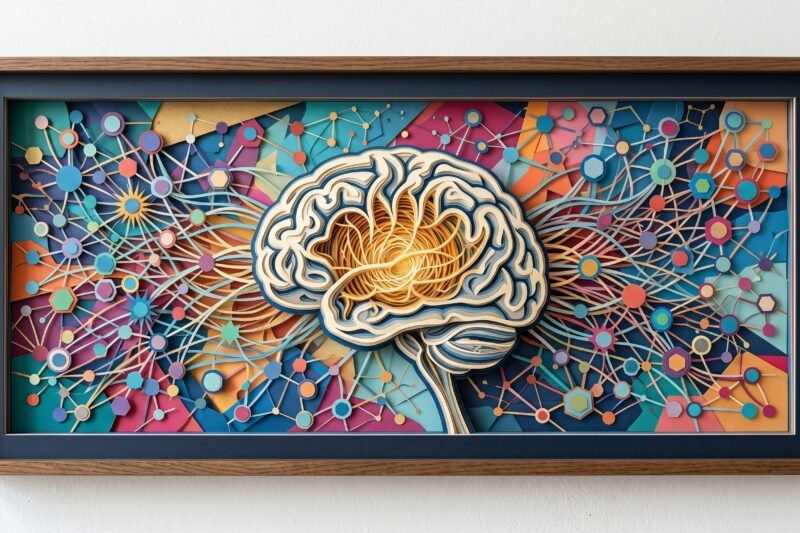
You’ve felt it before: that moment when you want to try something new, speak up in a meeting, or take a creative risk, and suddenly your mind offers up a dozen reasons why it won’t work. The voice isn’t cruel, necessarily. It’s matter-of-fact, almost helpful in its certainty. “You’re not good at that kind of thing.” “People like you don’t succeed in those situations.” “Remember what happened last time you tried?” The cage door swings shut before you even realize you were reaching for the handle.
This mental birdcage, constructed from years of learned helplessness and reinforced by limiting beliefs, represents one of the most pervasive barriers to human flourishing. However, unlike a physical cage, this one exists entirely within the architecture of our own thinking. Therefore, understanding its construction becomes the first step toward dismantling it entirely.
The architecture of mental imprisonment
Learned helplessness emerged from Martin Seligman’s groundbreaking research in the 1970s, though the implications reached far beyond his original laboratory settings. Seligman discovered that when subjects experienced repeated situations where their actions had no effect on outcomes, they eventually stopped trying altogether, even when escape became possible. Furthermore, this learned inability to act persisted across different contexts, creating a generalized sense of powerlessness.
What makes this phenomenon particularly insidious is how it masquerades as wisdom. After all, learning from past failures seems reasonable, even adaptive. Nevertheless, the line between healthy caution and paralyzing helplessness often blurs beyond recognition. Subsequently, we find ourselves trapped not by external circumstances, but by our own predictions about what those circumstances will produce.
Limiting beliefs operate as the cage’s structural framework, providing the seemingly logical justification for our learned helplessness. These beliefs feel true because they’re built from real experiences, actual data points collected over years of living. Additionally, they’re reinforced by a confirmation bias that notices evidence supporting the belief while filtering out contradictory information. Consequently, “I’m not creative” becomes not just a self-assessment, but a fundamental truth about reality itself.
The cognitive scientist Diana Tamir’s research on self-referential thinking reveals how these beliefs become neurologically entrenched. When we think about ourselves, specific neural networks activate that don’t engage when we consider other people or abstract concepts. Moreover, these self-referential networks show increased activity in people experiencing depression and anxiety, suggesting that ruminating about our limitations literally strengthens the neural pathways that support those limitations.
The illusion of safety in confinement
The mental birdcage serves a function that often goes unrecognized: it provides the illusion of control through limitation. If you never try, you can’t fail in ways that surprise or devastate you. If you keep your expectations narrow, disappointment becomes manageable. Indeed, there’s a peculiar comfort in knowing exactly what you can’t do.
This dynamic reflects what psychologists call “defensive pessimism, ” a strategy where people set low expectations and anticipate negative outcomes as a way of managing anxiety. While this approach can reduce immediate stress, it also creates what researchers Julie Norem and Nancy Cantor identified as a self-fulfilling prophecy that actually increases the likelihood of the feared outcome occurring.
Furthermore, the cage provides identity stability. “I’m not a public speaker” or “I don’t have a head for numbers” become organizing principles that simplify decision-making. They eliminate options, which paradoxically feels like clarity in a complex world. However, this clarity comes at the cost of possibility, trading the discomfort of uncertainty for the imprisonment of false certainty.
Neuroscientist Antonio Damasio’s work on somatic markers helps explain why these limiting beliefs feel so viscerally true. Our brains tag potential actions with emotional predictions based on past experiences, creating gut feelings that guide decision-making before conscious thought even begins. Therefore, approaching the edge of our comfort zone triggers genuine physiological alarm signals, making the cage feel like legitimate protection rather than arbitrary constraint.
The recursive nature of cognitive imprisonment
Perhaps the most sophisticated aspect of the mental birdcage is how it perpetuates itself through recursive loops. Each time we avoid an opportunity due to learned helplessness, we generate fresh evidence that supports our limiting beliefs. Similarly, each time we interpret ambiguous feedback through the lens of those beliefs, we reinforce the neural pathways that maintain our sense of powerlessness.
Cognitive behavioral research demonstrates how this process operates through what Aaron Beck termed the “cognitive triad”: negative thoughts about the self, the world, and the future. These three domains reinforce each other in a continuous cycle. Specifically, believing you lack capability (self) leads to seeing obstacles as insurmountable (world), which generates predictions of inevitable failure (future), which then confirms your original assessment of lacking capability.
Additionally, this recursive quality explains why traditional positive thinking often fails to create lasting change. Affirmations that contradict deeply held beliefs trigger what psychologists call “cognitive dissonance, ” leading the mind to reject the positive statement in favor of maintaining internal consistency. Consequently, telling yourself “I am confident” when your entire belief system operates from “I am inadequate” often strengthens the original belief rather than replacing it.
The research of Carol Dweck on growth versus fixed mindset illuminates another dimension of this recursiveness. People operating from a fixed mindset interpret challenges, effort, and setbacks as evidence of inherent limitation. Meanwhile, those with a growth mindset view the same experiences as opportunities for development. This interpretive difference creates completely different feedback loops, with fixed mindset thinking strengthening the cage while growth mindset thinking gradually dismantles it.
Recognizing the bars: identifying your specific cage
Before attempting escape, you must first map the specific architecture of your mental imprisonment. This requires developing what might be called “metacognitive awareness, ” the ability to observe your own thinking patterns without immediately identifying with them. Indeed, creating this observational distance becomes essential for recognizing which thoughts are accurate assessments versus which are simply familiar refrains.
Start by noticing your automatic responses to opportunity or challenge. When someone suggests you take on a new responsibility, what thoughts arise immediately? When you consider pursuing something you’ve always wanted to try, what reasons emerge for why it won’t work? These initial responses often reveal the most fundamental bars of your cage, the beliefs so automatic they feel like facts rather than interpretations.
Pay particular attention to language patterns that signal limiting beliefs in operation. Phrases like “I always, ” “I never, ” “I can’t, ” or “I’m not the type of person who” often indicate areas where learned helplessness has crystallized into identity. Similarly, notice when you use words like “realistic” or “practical” to justify avoiding growth opportunities, as these terms frequently mask fear of failure rather than genuine wisdom.
The psychologist Albert Ellis developed a framework for identifying what he called “irrational beliefs” that create emotional disturbance. These often follow patterns like “I must be perfect, ” “Everyone must approve of me, ” or “I can’t handle discomfort.” While Ellis focused on emotional consequences, these same belief patterns form the foundation of learned helplessness by setting impossible standards for action.
Additionally, examine the stories you tell about your past failures or limitations. How do you explain why certain things didn’t work out? Do your explanations focus on permanent, pervasive characteristics of yourself (“I’m not good with people”) or on specific, learnable skills and changeable circumstances (“I haven’t developed strong presentation skills yet”)? The difference reveals whether you’re operating from growth or fixed assumptions about your capabilities.
The neuroscience of cognitive flexibility
Understanding how the brain maintains and changes belief systems provides crucial insight into the liberation process. Neuroscientist Michael Merzenich’s research on brain plasticity demonstrates that neural networks remain changeable throughout our lives, contradicting earlier assumptions about fixed adult brain structure. However, this plasticity operates according to specific principles that must be understood to be effectively utilized.
The brain’s default tendency is to strengthen existing neural pathways through repetition while allowing unused connections to weaken. This process, called “synaptic pruning, ” explains why limiting beliefs become more entrenched over time if left unchallenged. Nevertheless, the same mechanism can work in reverse when we deliberately practice new thought patterns and behaviors consistently over time.
Furthermore, research on memory reconsolidation reveals that recalling a memory actually makes it temporarily changeable again. When you remember a past failure or limitation, the neural network encoding that memory becomes plastic for a brief window. During this period, new information or perspectives can literally alter how the memory gets re-encoded, potentially changing its emotional impact and meaning permanently.
The neurotransmitter systems involved in motivation and learning also play crucial roles in maintaining or dismantling the mental cage. Dopamine, often misunderstood as simply a “pleasure chemical, ” actually signals the prediction of reward and motivates approach behaviors. When learned helplessness develops, dopamine responses to potential opportunities diminish, creating a biological bias toward avoidance rather than exploration.
However, small successes can begin to restore these dopamine pathways, creating what researchers call “behavioral activation.” This explains why breaking free from learned helplessness often requires starting with extremely small actions that feel manageable rather than attempting dramatic changes that trigger overwhelming resistance.
Practical applications: techniques for cognitive liberation
The process of freeing your mind from learned helplessness and limiting beliefs requires both understanding the mechanisms involved and implementing specific practices that gradually rewire habitual patterns. The following approaches integrate insights from cognitive behavioral therapy, acceptance and commitment therapy, and neuroplasticity research.
Cognitive defusion techniques
Cognitive defusion, developed within acceptance and commitment therapy, involves learning to observe thoughts without automatically believing or obeying them. Instead of trying to eliminate limiting beliefs, this approach changes your relationship to them, reducing their power to control your behavior.
Practice labeling thoughts as thoughts: “I’m having the thought that I’m not qualified for this position” rather than “I’m not qualified.” This simple linguistic shift creates psychological distance between you and the belief, making it easier to evaluate its accuracy objectively. Additionally, experiment with adding phrases like “My mind is telling me that…” or “Part of me believes that…” to further reduce identification with limiting thoughts.
Another powerful defusion technique involves examining the historical origins of your beliefs. Ask yourself: “How old was I when I first learned this about myself?” Often, you’ll discover that beliefs you hold as adults originated from childhood experiences or adolescent feedback that may no longer be relevant to your current capabilities and circumstances.
Systematic desensitization through graduated exposure
Joseph Wolpe’s systematic desensitization provides a structured approach for gradually expanding your comfort zone. Rather than attempting dramatic changes that trigger intense resistance, this method involves creating a hierarchy of challenges arranged from least to most anxiety-provoking, then systematically working through them while maintaining emotional regulation.
Start by identifying a specific area where learned helplessness limits your choices. Create a list of related activities ranked from 1-10 in terms of how much anxiety they would generate. Begin practicing level 1 activities until they feel comfortable, then gradually progress up the hierarchy. This approach allows you to accumulate evidence of your capabilities while avoiding the overwhelming experiences that reinforce helplessness.
Crucially, combine exposure with relaxation techniques or mindfulness practices to prevent re-traumatization. The goal is to associate previously avoided activities with calm competence rather than anxiety and struggle.
Cognitive restructuring for belief examination
Cognitive restructuring involves systematically examining the evidence for and against limiting beliefs, then developing more balanced and accurate alternatives. This process requires intellectual honesty about both your limitations and capabilities, avoiding both harsh self-criticism and unrealistic positive thinking.
For each limiting belief, ask: “What evidence supports this belief? What evidence contradicts it? What would I tell a good friend who held this belief about themselves? What might be a more accurate and helpful way to think about this?” Write down your responses to create a concrete record of the examination process.
Pay special attention to cognitive distortions that maintain limiting beliefs: all-or-nothing thinking (“I’m either perfect or I’m a failure”), mental filtering (noticing only evidence that supports the limitation), and fortune telling (predicting negative outcomes without sufficient evidence). Learning to identify these patterns helps you recognize when your thinking has become unreliably pessimistic.
Step-by-step process for cage liberation
The following sequence provides a systematic approach for addressing both learned helplessness and limiting beliefs. While the process is presented linearly, actual change often occurs in cycles, with periods of progress followed by temporary returns to old patterns.
1. Develop awareness without judgment. Spend one week simply noticing when limiting thoughts arise without trying to change them. Write them down in a journal, noting the situations that trigger them and the physical sensations that accompany them. This observation phase builds metacognitive awareness without activating defensive resistance.
2. Trace the historical development of each major limiting belief. For your three most restrictive beliefs, write the story of how you came to hold them. Include specific incidents, influential people, and cultural messages that shaped these conclusions about yourself. Understanding the origins often reveals how circumstantial and changeable these “truths” actually are.
3. Conduct an evidence audit. For each limiting belief, create three columns: “Evidence For, ” “Evidence Against, ” and “Alternative Explanations.” Be thorough and honest in all three columns. Most people discover they have much more evidence against their limitations than they previously recognized, but had been mentally filtering it out.
4. Design micro-experiments. Choose one limiting belief and design the smallest possible experiment that could generate contradictory evidence. If you believe you’re not creative, spend five minutes daily doing something creative for one week. If you think you can’t handle conflict, practice stating one small preference per day. The key is starting with actions so small they feel almost trivial.
5. Practice cognitive defusion daily. Set a reminder to notice limiting thoughts three times per day, then practice the labeling technique: “I’m having the thought that…” or “My mind is telling me that…” This consistent practice gradually weakens the automatic believability of these thoughts.
6. Expand gradually through systematic exposure. Once micro-experiments feel comfortable, gradually increase the challenge level. Create a hierarchy of increasingly bold actions and work through them systematically, maintaining emotional regulation throughout the process.
7. Celebrate evidence accumulation. Keep a record of times when you acted despite limiting beliefs and achieved better outcomes than expected. Review this evidence regularly to counteract the brain’s negativity bias, which tends to forget positive data while remembering limitations vividly.
8. Develop a growth mindset interpretation practice. When setbacks occur, practice reframing them through a learning lens rather than a limitation lens. Instead of “This proves I can’t do it, ” ask “What can this teach me?” or “How can I approach this differently next time?”
The philosophical dimensions of mental freedom
Beyond the psychological and neurological aspects, freeing yourself from mental imprisonment involves grappling with fundamental questions about human nature, possibility, and responsibility. The existentialist philosopher Jean-Paul Sartre argued that we are “condemned to be free, ” meaning that the weight of choosing our response to circumstances cannot be avoided, even when those circumstances seem to leave no options.
This perspective suggests that learned helplessness represents a form of “bad faith, ” Sartre’s term for denying our fundamental freedom to choose our response to life conditions. While external constraints certainly exist, the cage of limiting beliefs often extends far beyond what reality actually requires, creating unnecessary suffering through self-imposed restrictions.
Similarly, the Stoic philosophers distinguished between what is “up to us” and what is “not up to us, ” focusing their attention entirely on the former category. Epictetus, who spent years in physical slavery before gaining his freedom, argued that true liberation occurs when we recognize that our thoughts, judgments, and responses remain within our control regardless of external circumstances.
However, this philosophical framework must be balanced against legitimate acknowledgment of structural inequalities and systemic barriers that do create real limitations for many people. The goal is not to blame individuals for their circumstances, but to help them identify areas where they have more agency than they might recognize while remaining realistic about genuine constraints.
Buddhist psychology offers another valuable perspective through its concept of “mental formations, ” habitual patterns of thinking that create suffering through their automatic, unconscious operation. The practice of mindfulness involves developing the ability to observe these patterns without being controlled by them, creating space between stimulus and response where conscious choice becomes possible.
The social dimensions of cognitive liberation
Mental cages are not constructed in isolation. Family systems, cultural messages, economic circumstances, and social identities all contribute to the beliefs we develop about our capabilities and possibilities. Therefore, freeing yourself from learned helplessness often requires examining and sometimes challenging the social environments that reinforce limiting beliefs.
Research on “stereotype threat” demonstrates how social expectations can impair performance even among highly capable individuals. When people are reminded of negative stereotypes about their identity group before performing relevant tasks, their performance often suffers, creating a self-fulfilling prophecy that seems to confirm the original stereotype.
Additionally, family systems often maintain homeostasis by unconsciously discouraging individual members from changing too dramatically. As you begin expanding beyond learned limitations, you might encounter subtle pressure from others to return to your previous patterns. This resistance doesn’t necessarily reflect malicious intent, but rather the natural tendency of systems to maintain stability.
Building supportive relationships with people who believe in your capacity for growth becomes crucial during this process. Seek out individuals who respond to your attempts at change with encouragement rather than skepticism, and who model the kind of growth mindset you’re trying to develop within yourself.
Mentorship relationships can be particularly valuable, as they provide examples of people who have navigated similar challenges successfully. However, choose mentors carefully, ensuring they demonstrate genuine growth rather than simply projecting confidence that masks their own unresolved limitations.
Integration and sustainable transformation
The ultimate goal is not simply escaping the mental cage, but developing the cognitive flexibility to recognize and address limiting patterns as they arise throughout life. This requires building what psychologist Carol Dweck calls a “growth mindset” as a default orientation rather than a conscious effort.
Sustainable change occurs through what researchers call “implementation intentions, ” specific if-then plans that automate new responses to familiar triggers. For example: “If I notice myself thinking ‘I can’t do this, ‘ then I will ask ‘What small step could I take to learn more about whether this is true?'” This type of planning helps new patterns become as automatic as the old limiting ones.
Additionally, regular reflection practices help maintain awareness of your thinking patterns before they solidify into new limitations. Weekly or monthly reviews where you examine recent challenges, successes, and the thoughts that influenced your choices can prevent the gradual return of learned helplessness.
The process also benefits from what might be called “identity flexibility, ” the ability to hold your self-concept lightly enough that new experiences can inform how you understand your capabilities. This doesn’t mean becoming unstable or uncertain about who you are, but rather maintaining openness to discovering aspects of yourself that haven’t yet been fully expressed.
Remember that freeing your mind from the cage of learned helplessness is not a one-time achievement but an ongoing practice. The same mental patterns that created the original limitations will attempt to reassert themselves, particularly during periods of stress or uncertainty. Therefore, cognitive liberation requires the same kind of consistent attention that physical health requires: daily practices that maintain and strengthen your capacity to choose growth over safety, possibility over certainty.
The bird of your imagination doesn’t simply want to escape the cage; it wants to remember how to fly. This remembering happens gradually, through repeated experiences of spreading wings that were kept folded for too long, testing currents of air that seemed too risky to trust. Each flight builds strength and confidence, expanding the territory of what feels possible until the sky itself becomes home rather than something glimpsed through bars.