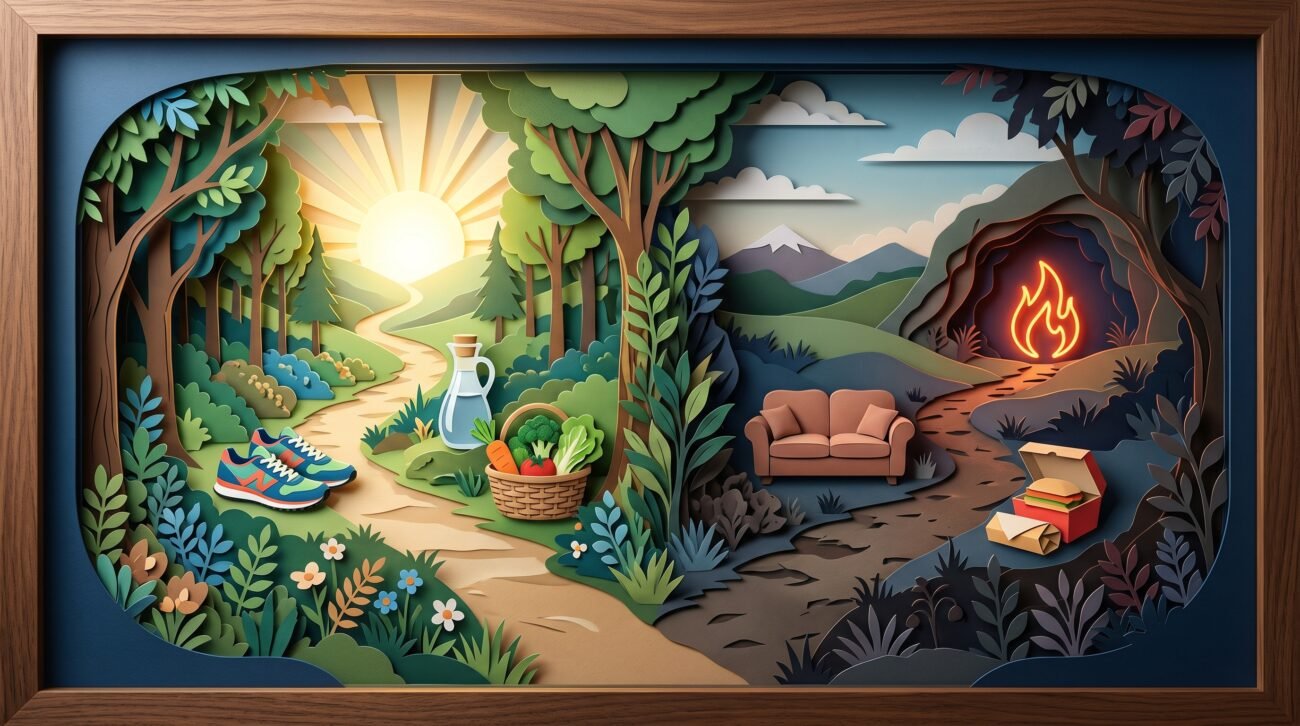
We often face a simple choice. Do we pick what feels good now? Or do we choose what is good for us later? This is the struggle between short-term comfort and our future wellness. The easy path often calls to us. But the better path can lead to a much happier life. Understanding this choice is the first step. It helps us build a foundation for lasting health.
Short-Term Comfort Vs Long-Term Health Choices
Daily life is full of small decisions. These choices add up over time. They can either build our health or break it down. Looking at the difference between short-term comfort vs long-term health helps us see this clearly. Each choice is a chance to invest in your future self.
1. Cooking Over Fast Food
The smell of fast food is tempting. It is quick and easy after a long day. This is a classic example of short-term comfort. You save time now. But what about later? Fast food is often high in salt, sugar, and unhealthy fats. These can harm your long-term health. Cooking at home takes more effort. You have to plan, shop, and prepare your meal. But you control what goes into your food. You can use fresh items. This leads to better nutrition. It supports your body for years to come.
2. Exercise Over Sedentary Habits
Your couch feels so good after work. It is easy to sink into it and watch TV. This feels relaxing in the moment. Yet, sitting too much is not good for you. Your body needs to move. Choosing exercise is a powerful act for your future. Even a short walk is better than sitting still. Moving your body helps your heart. It strengthens your muscles and bones. It can even make you feel happier. This choice is tough at first. But it pays off with more energy and a healthier life.
3. Sleep Over Late Nights
One more episode. One more chapter. It is easy to put off sleep. Staying up late offers a bit of extra fun or quiet time. This is a very common form of short-term comfort. However, your body needs rest to repair itself. Good sleep is vital for your brain and body to function well. When you choose to sleep, you are helping your long-term health. You will have more focus the next day. You will feel better. Your body will be stronger against illness.
4. Care Over Ignoring Symptoms
Sometimes our bodies send us signals. A small pain. A feeling of being tired all the time. It is easy to ignore these signs. We hope they will just go away. This avoids the worry of a doctor’s visit. But ignoring symptoms is a risky choice. It puts immediate ease over future wellness. Seeking care is a proactive step. It means facing a possible problem head-on. Early detection can make a huge difference. It can lead to simpler treatments and better outcomes for your long-term health.
5. Stop Seeking Immediate Pleasure
Our world is built for quick rewards. We can get food, entertainment, and information instantly. This trains our brains to want things right now. Seeking immediate pleasure feels good for a moment. But it can lead to poor choices. It might mean buying something you cannot afford. Or eating a whole bag of chips. Learning to pause is a key skill. It means you stop and think before you act. This helps you choose what is truly best for you, not just what feels good in the second.
6. Water Over Sugary Drinks
A sweet soda or juice can be very refreshing. The sugar gives you a quick burst of energy. This is a simple short-term comfort. But that rush is followed by a crash. Sugary drinks are linked to many health problems. Water, on the other hand, is essential for life. It hydrates your body without adding empty calories. Choosing water is a small change with big rewards. It supports everything from your skin to your digestion. It is a simple swap for a healthier future.
7. Stretching Over Prolonged Sitting
If you have a desk job, you sit a lot. It is easy to stay in one position for hours. Your body gets stiff and tight. Taking a few minutes to stretch might seem like a bother. It interrupts your work. But that brief discomfort is a gift to your future self. Stretching keeps your muscles flexible. It helps prevent aches and pains. It improves your posture and blood flow. This small habit protects your mobility for years to come.
8. Walking Over Short Drives
The store is just a few blocks away. It is so easy to hop in the car. Driving is fast and requires little effort. This is pure short-term comfort. But what if you walked instead? Walking takes a bit more time. It requires a little more energy. Yet, those extra steps are a powerful investment in your long-term health. Walking is great for your heart. It builds leg strength. It also gives you a moment to clear your head and enjoy the fresh air.
Instant Gratification Vs Long Term Happiness
There is a deep canyon between a fleeting thrill and lasting joy. The debate of instant gratification vs long term happiness is central to a good life. One is a spark. The other is a steady flame. Understanding their differences helps us make wiser choices. We learn to feed the flame, not just chase the sparks.
Dopamine Spikes Versus Sustained Joy
When you get a like on social media or eat a piece of cake, your brain releases dopamine. It is a chemical that makes you feel pleasure. This is a short, sharp spike. It feels great, but it fades fast. Soon, you are looking for the next hit. Sustained joy is different. It comes from things like meaningful relationships, personal growth, and helping others. It does not create a big spike. Instead, it builds a stable sense of well-being and contentment that lasts.
Quick Fixes Versus Root Solutions
Imagine you have a headache. A painkiller is a quick fix. It helps for a little while. This is like getting short-term comfort. But what if the headache is because you are not drinking enough water? Drinking more water is a root solution. It addresses the real cause. It takes more time to work. But it prevents the problem from coming back. Chasing instant gratification is like always reaching for the painkiller. Working for long-term happiness is about finding and fixing the root cause.
Temporary Relief Versus Permanent Growth
Avoiding a difficult conversation provides temporary relief. You do not have to feel anxious right now. But the problem is still there. It might even get bigger. Facing the conversation is harder. It leads to permanent growth. You learn to communicate better. You solve the issue. This same idea applies to many areas of life. Choosing the easy way out gives you relief now. Choosing the harder path often helps you grow into a stronger, more capable person.
Fleeting Thrills Versus Deep Fulfillment
A fleeting thrill is like watching a firework. It is bright, loud, and exciting. Then it is over. Buying a new gadget or going on a wild ride can be thrilling. But these feelings do not stick around. Deep fulfillment is more like planting a garden. It takes work, patience, and care. You do not get an instant reward. But watching it grow over time brings a profound sense of purpose and satisfaction. This is the kind of feeling that builds a happy life.
Reactive Choices Versus Proactive Planning
Reactive choices happen in the moment. You see a cookie, you eat it. You feel bored, you scroll your phone. These are often driven by a desire for short-term comfort. Proactive planning is about thinking ahead. You pack a healthy lunch so you are not tempted by junk food. You schedule time for a hobby you love instead of waiting for boredom to hit. Proactive choices require effort upfront. But they set you up for success and help you build the life you truly want.
Benefits Of Delaying Gratification
Learning to wait for a better reward is a superpower. It is a skill you can build with practice. The benefits of delaying gratification are huge. They touch every part of your well-being. By choosing the harder path now, you unlock a healthier and happier future. This is not about punishment; it is about empowerment.
1. Better Immune System Function
Your immune system is your body’s army. It fights off germs and keeps you healthy. Choices that offer short-term comfort, like eating sugary foods or not getting enough sleep, can weaken this army. When you delay gratification by eating well and resting properly, you give your immune system the fuel it needs. A stronger immune system means you get sick less often. And when you do get sick, you recover faster.
2. Lower Chronic Disease Risk
Many serious health problems are linked to lifestyle. Things like heart disease, diabetes, and certain cancers are often called chronic diseases. They develop over many years. Quick-fix habits like smoking, eating processed foods, and not exercising increase your risk. Making healthier choices today is a direct investment in lowering that risk. It might not feel as good as a doughnut right now. But it drastically improves your chances for a long, healthy life.
3. Prevent Early Cognitive Decline
Your brain needs care, just like your body. Things that are good for your heart are also good for your brain. Regular exercise, a healthy diet, and getting enough sleep all protect your brain cells. So does learning new things and challenging your mind. These activities require effort. They are not as easy as watching TV. But they help keep your mind sharp as you age. They can help delay or prevent memory problems later in life.
4. Preserve Joint Mobility Longer
Our joints allow us to move freely. As we get older, they can become stiff and painful if we do not take care of them. Sitting for too long is a form of short-term comfort that is bad for joints. Gentle movement, stretching, and exercise keep them healthy. It maintains the fluid that lubricates them. It strengthens the muscles that support them. Choosing to move today helps ensure you can keep moving with ease for many years.
5. Maintain High Energy Levels
It sounds strange, but using energy gives you more energy. Lying on the couch can make you feel more tired. A quick walk or workout can make you feel more alive. Sugary snacks give you a quick energy spike, but it is followed by a big drop. Healthy foods provide slow, steady energy that lasts all day. By choosing healthy habits, you are building a body that has more natural energy and stamina.
6. Reduce Psychological Stress Markers
The constant chase for short-term comfort can be stressful. You are always looking for the next hit of pleasure. You might feel guilty about your choices. This creates a cycle of stress. Delaying gratification builds self-control and resilience. When you know you can make good choices, you feel more in control of your life. This confidence lowers stress. Healthy habits like exercise and good sleep are also proven stress-reducers.
7. Increase Healthy Life Expectancy
It is one thing to live a long life. It is another to live a long, healthy life. A healthy life expectancy is the number of years you can expect to live in good health, without major illness or disability. Every choice you make that favors long-term health adds to this. It means more years to enjoy your family, hobbies, and passions. It is perhaps the greatest reward for choosing the wiser path.
Overcoming Short-Term Comfort Habits
Knowing the right thing to do is one thing. Actually doing it is another. The pull of short-term comfort is strong. It is a habit wired deep into our brains. But you can rewire it. With the right strategies, you can break free from harmful habits and build a life that supports your long-term health goals. It takes patience and a plan.
1. Identify Your Core Triggers
Habits do not just happen. They are triggered by something. Maybe you reach for snacks when you feel stressed. Or you skip your workout when you feel tired. The first step is to become a detective. Pay attention to what happens right before you choose short-term comfort. Is it a time of day? A feeling? A person? Once you know your triggers, you can make a plan to deal with them in a healthier way.
2. Use Ten Minute Rules
When a craving hits, it feels urgent. The “Ten Minute Rule” is a simple but powerful tool. When you want to do something that offers short-term comfort (like eating junk food or skipping a task), tell yourself you will wait just ten minutes. During that time, do something else. Go for a walk. Listen to a song. Often, after ten minutes, the craving will be much weaker. This small pause gives your thinking brain a chance to catch up with your feeling brain.
3. Design Healthier Living Environments
Your environment has a huge impact on your choices. It is hard to eat healthy if your kitchen is full of chips and cookies. It is hard to exercise if your workout clothes are buried in a closet. Make the healthy choice the easy choice. Put a bowl of fruit on the counter. Keep your running shoes by the door. Unsubscribe from fast-food marketing emails. By shaping your surroundings, you make it easier to stick to your goals.
4. Find Reliable Accountability Partners
Changing habits is easier when you are not alone. An accountability partner is someone you can share your goals with. This could be a friend, a family member, or a workout buddy. You can check in with each other. You can offer encouragement when things get tough. Knowing that someone else is aware of your goals can be a powerful motivator. It makes you more likely to follow through, even when you do not feel like it.
5. Track Daily Habit Progress
Building new habits takes time. It is easy to get discouraged if you do not see results right away. Tracking your progress can help you stay motivated. Use a simple calendar or a journal. Put a checkmark down for every day you stick to your new habit. Do not focus on perfection. Focus on consistency. Seeing a chain of checkmarks grow is very satisfying. It shows you that your small, daily efforts are adding up to real change.
Conclusion
The path to long-term health is paved with small, conscious choices. It is a quiet battle fought every day between what is easy and what is wise. The appeal of short-term comfort will always be there. It whispers promises of immediate relief and pleasure. But its rewards are fleeting. True, lasting happiness is not found in a quick fix. It is built. It is earned through the discipline of choosing better. Every time you cook a meal, take a walk, or get a good night’s sleep, you are casting a vote for your future self. These choices may feel small, but they are the most powerful investment you can ever make in your own well-being.
Frequently Asked Questions
Why do we naturally prefer short-term comfort over long-term health?
Our brains evolved to prioritize immediate survival. For our ancestors, finding food and conserving energy right now was more important than planning for retirement. This wiring makes us naturally drawn to immediate rewards. Seeking immediate pleasure gives our brain a quick hit of a feel-good chemical called dopamine. This creates a powerful feedback loop that is hard to break.
How can I stop seeking immediate pleasure in my daily routine?
Start by creating a small pause between a craving and your action. You can use the “Ten Minute Rule” for this. Also, make healthy options more convenient. For example, prepare healthy snacks ahead of time. Finally, focus on how good you feel after making a healthy choice. This helps your brain associate good feelings with long-term behaviors, not just instant ones.
What are the main benefits of delaying gratification for older adults?
For older adults, the benefits are very practical. Delaying gratification by staying active helps preserve mobility and independence. Choosing a healthy diet can manage chronic conditions and keep the mind sharp. It leads to a higher quality of life, allowing for more active and engaged golden years. It is never too late to start making choices that support long-term health.
How long does it take to form habits that support long-term health?
There is no magic number. You may have heard it takes 21 days, but studies show it varies a lot from person to person and from habit to habit. On average, it can take anywhere from two to eight months for a new behavior to become automatic. The key is not perfection, but consistency. Focus on showing up each day, and be patient with yourself through the process.