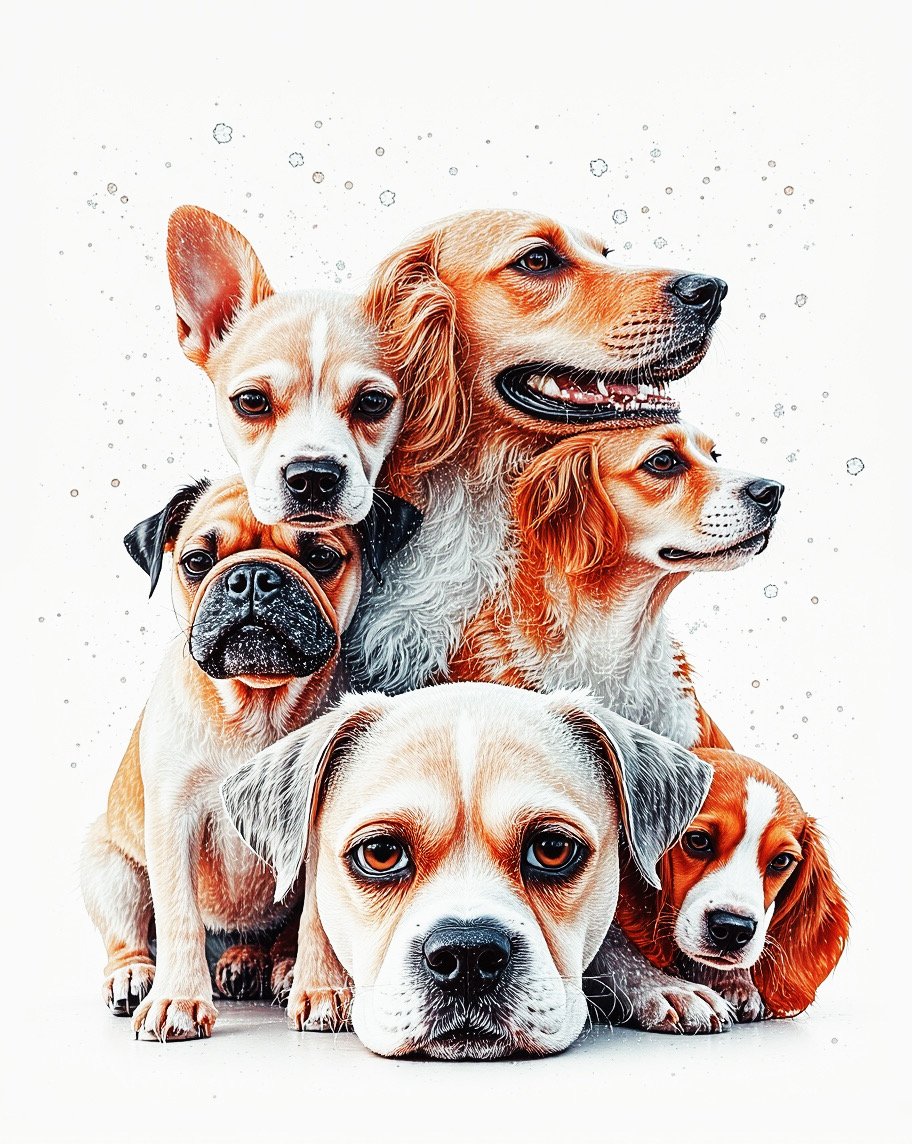
There’s something almost mystical that happens the moment we lock eyes with a beloved pet. Time seems to suspend itself, worries fade into the background, and for just a heartbeat, we glimpse what pure, uncomplicated love might actually feel like. This isn’t mere sentimentality or anthropomorphism. It’s a recognition of something far deeper: our animal companions serve as unexpected spiritual teachers, offering us profound lessons about the very nature of love, presence, and what it means to be truly alive.
The psychological effects of pet ownership extend far beyond simple companionship. When we open our hearts and homes to these four-legged (or feathered, or scaled) teachers, we embark on a journey of transformation that touches the deepest parts of our being. They become mirrors reflecting back our capacity for tenderness, patience, and selfless care. They challenge our assumptions about communication, teaching us to listen with our hearts rather than our minds. Most importantly, they offer us a daily masterclass in unconditional love, a concept many of us struggle to understand, let alone practice.
Yet this transformation isn’t always gentle or easy. Pets push us beyond our comfort zones, demanding we show up consistently, even on our worst days. They require us to confront our limitations, our impatience, our need for control. Through their complete dependence on us, they awaken a fierce protectiveness we may never have known we possessed. Through their inevitable aging and eventual passing, they teach us about impermanence and the preciousness of each ordinary moment. The psychological effects of these sacred bonds ripple outward, reshaping not just how we relate to animals, but how we understand ourselves, our relationships, and our place in the interconnected web of life.
## The Mirror of Unconditional Acceptance
When we truly examine the psychological impact our pets have on us, we must begin with perhaps their greatest gift: the experience of unconditional acceptance. Unlike human relationships, which often come laden with expectations, judgments, and the complex dance of social dynamics, our pets offer us something increasingly rare in modern life. They love us on our worst days just as fiercely as they do on our best. They don’t care about our bank account, our career achievements, or whether we remembered to brush our teeth before crawling into bed.
This experience of being loved without conditions creates a profound shift in our psychological landscape. Dr. Alan Beck’s research at Purdue University demonstrates that pet owners show significantly lower levels of cortisol and higher levels of oxytocin, the so-called “love hormone.” But these biochemical changes reflect something deeper happening in our souls. When we’re consistently met with enthusiasm rather than criticism, acceptance rather than judgment, we begin to internalize a new narrative about our worthiness of love.
Consider Sarah, a corporate lawyer who struggled with perfectionism and constant self-criticism. Her rescue dog, Murphy, would greet her with the same tail-wagging joy whether she’d had a triumphant day in court or had completely botched an important presentation. “Murphy didn’t care that I felt like a failure,” she reflects. “He just cared that I was home.” Over time, this daily experience of unconditional welcome began to soften the harsh inner voice that had driven her toward burnout. The psychological shift was gradual but unmistakable: she started treating herself with a fraction of the kindness Murphy showed her every single day.
This mirror of acceptance doesn’t just heal our relationship with ourselves. It fundamentally alters our capacity to offer love to others. When we experience true unconditional acceptance, we naturally begin extending it outward. Pet owners often report becoming more patient with family members, more compassionate with friends going through difficult times, and more willing to forgive both others and themselves. The psychological effect ripples outward like rings on still water, transforming not just our inner world but our entire relational ecosystem.
## The Practice of Present-Moment Awareness
Our pets exist in a state that spiritual teachers have spent lifetimes trying to achieve: complete presence in the current moment. They don’t replay yesterday’s mistakes or worry about tomorrow’s uncertainties. When they’re eating, they eat. When they’re playing, they play. When they’re resting, they rest with their entire being. Living alongside these masters of mindfulness creates a natural invitation into present-moment awareness, one of the most profound psychological shifts we can experience.
The research on this phenomenon is compelling. Studies show that pet owners demonstrate increased activity in the parasympathetic nervous system, the part of our biology responsible for the “rest and digest” response. This isn’t merely about relaxation; it’s about fundamentally rewiring our default state from constant vigilance to peaceful awareness. Dr. Patricia McConnell’s work reveals that the simple act of petting an animal can shift brainwave patterns from the anxious beta state to the calm alpha state within minutes.
But the transformation goes beyond what happens during direct interaction with our pets. Living with animals who embody presence teaches us to recognize and value these moments in our own lives. Tom, a busy father of three, describes how his cat, Whiskers, became an unexpected meditation teacher. “I’d be rushing around, stressed about deadlines and soccer practice schedules, and I’d see Whiskers completely absorbed in watching a leaf blow across the yard. Something about that complete attention to something so simple would stop me in my tracks.” Over months, Tom found himself naturally pausing throughout the day, taking what he calls “Whiskers moments” to really see, hear, and feel whatever was happening right then.
This cultivation of present-moment awareness has cascading psychological effects. Anxiety, which feeds on future-focused worry, begins to lose its grip. Depression, often rooted in past-focused rumination, starts to lift. We become more creative, more intuitive, more capable of accessing what spiritual traditions call “beginner’s mind.” Our pets don’t just model presence; they create countless opportunities for us to practice it, transforming mindfulness from a concept we read about to a living reality we experience multiple times each day.
## The Healing Power of Physical Touch and Oxytocin
Touch is humanity’s first language, yet many of us live touch-starved lives, disconnected from the healing power of physical affection. Our pets offer us a return to this fundamental human need, providing opportunities for healing touch that can literally rewire our nervous systems. The simple act of stroking a dog’s fur or feeling a cat’s purr reverberating through their body against our chest creates measurable changes in our physiology and psychology.
The science behind this transformation is remarkable. Physical contact with pets triggers the release of oxytocin while simultaneously reducing cortisol levels. But oxytocin isn’t just about feeling good in the moment; it’s a profound neurochemical that enhances our capacity for trust, empathy, and social bonding. Regular release of oxytocin through pet interaction actually changes the structure of our brains, making us more open to connection and less defensive in our relationships with others.
This healing extends particularly powerfully to those who have experienced trauma or abuse. For individuals whose past experiences have made human touch feel unsafe or threatening, pets can offer a bridge back to the healing power of physical affection. Maria, a survivor of childhood abuse, found that her therapy rabbit, Clover, provided her first safe experience of nurturing touch in decades. “With Clover, I could practice being gentle, being trusted, being needed in a good way,” she explains. “It was like learning to trust my own heart again.”
The psychological effects extend beyond the immediate moment of contact. Regular physical affection with pets helps regulate our autonomic nervous system, improving sleep quality, reducing blood pressure, and enhancing immune function. But perhaps most importantly, it reconnects us with our own bodies. In a world that often feels abstract and digitized, the simple reality of warm fur beneath our fingers or a heartbeat against our palm anchors us back into the physical realm. We remember that we are not just thinking beings, but embodied souls capable of both giving and receiving love through the simple miracle of touch.
## Responsibility as a Path to Personal Growth
The decision to welcome a pet into our lives inevitably transforms us from the center of our own universe into caretakers responsible for another being’s wellbeing. This shift from self-focus to other-focus represents one of the most significant psychological developments we can undergo. The daily requirements of feeding, exercising, grooming, and caring for a dependent creature pushes us beyond our comfort zones and reveals capacities we may never have known we possessed.
This transformation doesn’t happen overnight or without struggle. The early days of pet ownership often bring a stark realization of how self-centered our lives have become. The puppy doesn’t care that we’re tired; she needs to go outside. The kitten doesn’t adjust his hunger to our schedule; he needs to eat when he needs to eat. This initial shock can feel overwhelming, but it’s actually the beginning of a profound psychological evolution toward what psychologists call “generative” behavior, actions focused on caring for and nurturing others.
The research supports this transformative effect. Studies show that pet owners score higher on measures of empathy, responsibility, and what researchers term “prosocial behavior.” But the changes go deeper than test scores can measure. Jake, a young man who had struggled with depression and aimlessness after college, describes how adopting his dog, Rex, forced him into a structure and purpose he’d been unable to create for himself. “Rex needed walks, which meant I had to get out of bed. He needed food, which meant I had to go to the store. Slowly, taking care of him taught me how to take care of myself.”
This responsibility-driven growth particularly impacts our relationship with routine and consistency. Pets thrive on predictable schedules, and meeting their needs requires us to develop the very habits that promote psychological wellbeing: regular sleep patterns, daily exercise, consistent meal times. The external structure required for pet care becomes internal discipline, and the discipline becomes a foundation for broader life changes. We discover that showing up for another being day after day, regardless of our mood or circumstances, actually expands our capacity to show up for ourselves and others in all areas of life.
## Communication Beyond Words: Developing Emotional Intelligence
Our relationships with pets offer us a masterclass in non-verbal communication, teaching us to read body language, energy, and emotional states with remarkable precision. Since pets can’t tell us in words when they’re anxious, excited, hurt, or content, we must develop what amounts to emotional telepathy, learning to interpret the subtle cues of posture, breathing, movement, and energy that reveal their inner states. This heightened sensitivity to non-verbal communication inevitably spills over into our human relationships, making us more emotionally intelligent and empathetically aware.
The psychological implications of this enhanced sensitivity are profound. Research by Dr. Brian Hare at Duke University shows that people who live with pets demonstrate significantly improved ability to read facial expressions and interpret emotional states in humans. This makes sense when we consider that successful pet ownership requires us to constantly attune to subtle signals: the slight change in our dog’s gait that indicates pain, the particular meow that means our cat is anxious rather than hungry, the way our bird’s feathers reflect their mood.
This training in emotional attunement creates ripple effects throughout our lives. Linda, a teacher who adopted a reactive rescue dog named Scout, found that learning to read Scout’s stress signals made her dramatically more aware of her students’ emotional states. “Scout taught me to notice the small signs before the big meltdowns,” she explains. “A slight tension in his shoulders meant he was getting overwhelmed. I started noticing similar patterns in my kids at school. I could intervene before they hit their breaking point.” This enhanced emotional intelligence improved not just her classroom management, but her relationships with her own family members.
Living with pets also teaches us patience with different communication styles and processing speeds. Animals don’t operate on our timeline or respond to our verbal reasoning. They require us to slow down, to repeat information in different ways, to find creative approaches when our first attempt at communication fails. This patience and flexibility becomes a gift we can offer to the humans in our lives, particularly in challenging relationships or when dealing with people who process information differently than we do.
## Confronting Mortality and the Preciousness of Life
Perhaps no aspect of pet ownership affects us more profoundly than the inevitable confrontation with mortality. Our beloved companions age in fast-forward compared to human life, compressing an entire lifetime of growth, maturity, and decline into a decade or two. This accelerated life cycle forces us to grapple with impermanence, loss, and grief in ways that can fundamentally transform our relationship with life itself.
The psychological impact of witnessing this condensed life cycle begins long before our pets show signs of aging. From the moment we welcome them into our families, we carry the knowledge that we will likely outlive them. This awareness, rather than diminishing our love, often intensifies it. We learn to treasure ordinary moments because we understand their finite nature. The morning snuggle, the evening walk, the way they greet us at the door becomes precious precisely because we know it won’t last forever.
Dr. Wallace Sife’s research on pet loss reveals that the grief experienced when losing a beloved animal companion often equals or exceeds the grief experienced in human loss. This isn’t because we love our pets more than people, but because the relationship with our pets is often uncomplicated by the complex dynamics that characterize human relationships. The loss feels pure, unmitigated by relief or unfinished business. Working through this grief teaches us about the true cost of love and the courage required to keep our hearts open despite the certainty of eventual loss.
The confrontation with mortality through our pets’ aging also serves as a rehearsal for our own mortality and that of our human loved ones. Watching a once-vibrant puppy slow down, develop health issues, and eventually cross the rainbow bridge gives us firsthand experience with the reality that all bodies are temporary. This experience, while painful, often leads to a profound shift in values and priorities. We become less concerned with accumulating things and more focused on accumulating moments. We worry less about minor inconveniences and appreciate more fully the simple miracle of shared presence.
## The Ripple Effect: How Pet Love Transforms Human Relationships
The love we experience with our pets doesn’t exist in isolation; it creates expanding circles of transformation that touch every relationship in our lives. The patience we develop while house-training a puppy makes us more patient with a struggling colleague. The forgiveness we practice when our cat scratches the furniture prepares us to forgive larger hurts in human relationships. The daily choice to prioritize our pet’s needs over our own convenience teaches us about the kind of selfless love that deepens all meaningful relationships.
This ripple effect is particularly noticeable in how pet ownership affects our relationships with children. The nurturing behaviors we practice with our pets, the gentle correction, the consistent boundary-setting, the celebration of small progress, all become part of our relational repertoire. Parents who have pets often report feeling more prepared for the patience and unconditional love that children require. The skills are remarkably transferable: consistency, gentle correction, celebrating small victories, and maintaining love even in the midst of frustrating behavior.
The psychological research supports these observations. Studies show that children who grow up with pets demonstrate higher levels of empathy, better social skills, and increased emotional regulation. But the benefits aren’t limited to children. Adults who share their lives with pets report greater satisfaction in their marriages, stronger friendships, and improved ability to navigate workplace relationships. The daily practice of caring for a being whose needs sometimes conflict with our immediate desires teaches us the kind of compromise and consideration that healthy human relationships require.
Perhaps most significantly, the experience of being needed and trusted by our pets expands our sense of our own capacity for love. Many people discover through pet ownership that they’re capable of a depth of care and tenderness they never knew they possessed. This expanded sense of our own loving nature makes us more willing to risk vulnerability in human relationships, more confident in our ability to show up for others during difficult times, and more trusting of our own instincts about how to express care and affection.
## Integration: Living the Lessons Our Pets Teach
The psychological effects of pet ownership reach their fullest expression when we consciously integrate the lessons our animal companions teach us into every aspect of our lives. This integration requires intentional reflection on what our pets are showing us about love, presence, forgiveness, and the art of being fully alive. It means recognizing that the daily interactions with our furry, feathered, or scaled teachers are actually spiritual practices disguised as routine care.
The process of integration begins with awareness. We must notice the moments when our pets call us back to presence, when their unconditional acceptance soothes our self-criticism, when their need for care pulls us out of self-absorption. These moments of recognition become opportunities for deeper transformation. Instead of simply enjoying our dog’s enthusiasm when we return from work, we can ask ourselves what it would look like to greet our human family members with similar joy and attention.
This integration work requires patience with ourselves as we practice applying pet-taught lessons to more complex human situations. The unconditional love we experience with our animals may feel easier than the conditional, complicated love required in human relationships. The presence our pets model may seem simpler than maintaining awareness during a difficult conversation with a spouse or teenager. But this is exactly why our pets serve as such perfect teachers: they give us a safe space to practice these advanced spiritual skills before applying them in more challenging contexts.
The goal isn’t to treat humans like pets or to expect human relationships to be as uncomplicated as our animal bonds. Instead, it’s to let the pure experiences we have with our pets expand our understanding of what’s possible in terms of love, presence, and care. When we’ve experienced the joy of being greeted with pure enthusiasm, we can choose to offer that gift to others. When we’ve learned to read the subtle signs of our pet’s distress, we can attune more carefully to the emotional needs of our human companions.
The Growing Light philosophy recognizes that spiritual teachers come in many forms, and some of the most profound lessons arrive on four paws or with feathers and wings. Our pets don’t just change our brain chemistry or provide companionship; they serve as bridges to our own capacity for unconditional love, present-moment awareness, and selfless care. They remind us that spiritual growth isn’t always about meditation cushions and sacred texts. Sometimes it’s about showing up with a leash in hand, ready for an evening walk with a teacher who loves us exactly as we are.
Through the sacred bond we share with our animal companions, we discover that transformation often comes not through grand gestures or dramatic revelations, but through the accumulated grace of countless small moments: the morning ritual of filling a food bowl, the evening comfort of a warm body settled against us, the daily choice to prioritize another being’s wellbeing alongside our own. In learning to love our pets, we learn to love more fully, live more presently, and trust more deeply in the interconnected beauty of all life.