
In the depths of our being lies an eternal flame, a spark of pure potential waiting to illuminate the path toward authentic, conscious living. Yet for many of us, this inner light seems dimmed by the weight of routine, the fog of disconnection, and the subtle despair that creeps in when we realize we’re merely surviving rather than truly thriving. If you’ve ever felt this way, you’re not alone. The good news is that there’s a profound psychological approach that can help you reconnect with your authentic self and reignite that inner spark: Behavioral Activation.
Understanding Behavioral Activation: The Science of Reconnection
Behavioral Activation (BA) emerged from decades of psychological research as a powerful therapeutic approach, initially developed to treat depression. However, its applications extend far beyond clinical settings, offering a transformative framework for anyone seeking to live more consciously and authentically. At its core, Behavioral Activation operates on a deceptively simple yet profound principle: our behaviors shape our emotions, thoughts, and overall experience of life.
Unlike traditional approaches that focus primarily on changing thoughts or analyzing past experiences, Behavioral Activation recognizes that meaningful change often begins with action. It’s based on the understanding that when we engage in activities that align with our values and bring us genuine satisfaction, we naturally experience increased energy, motivation, and emotional well-being.
The beauty of this approach lies in its accessibility. You don’t need years of therapy or extensive self-analysis to begin experiencing its benefits. What you need is a willingness to observe your current patterns and make conscious choices about how you spend your time and energy.
The Neuroscience Behind the Spark
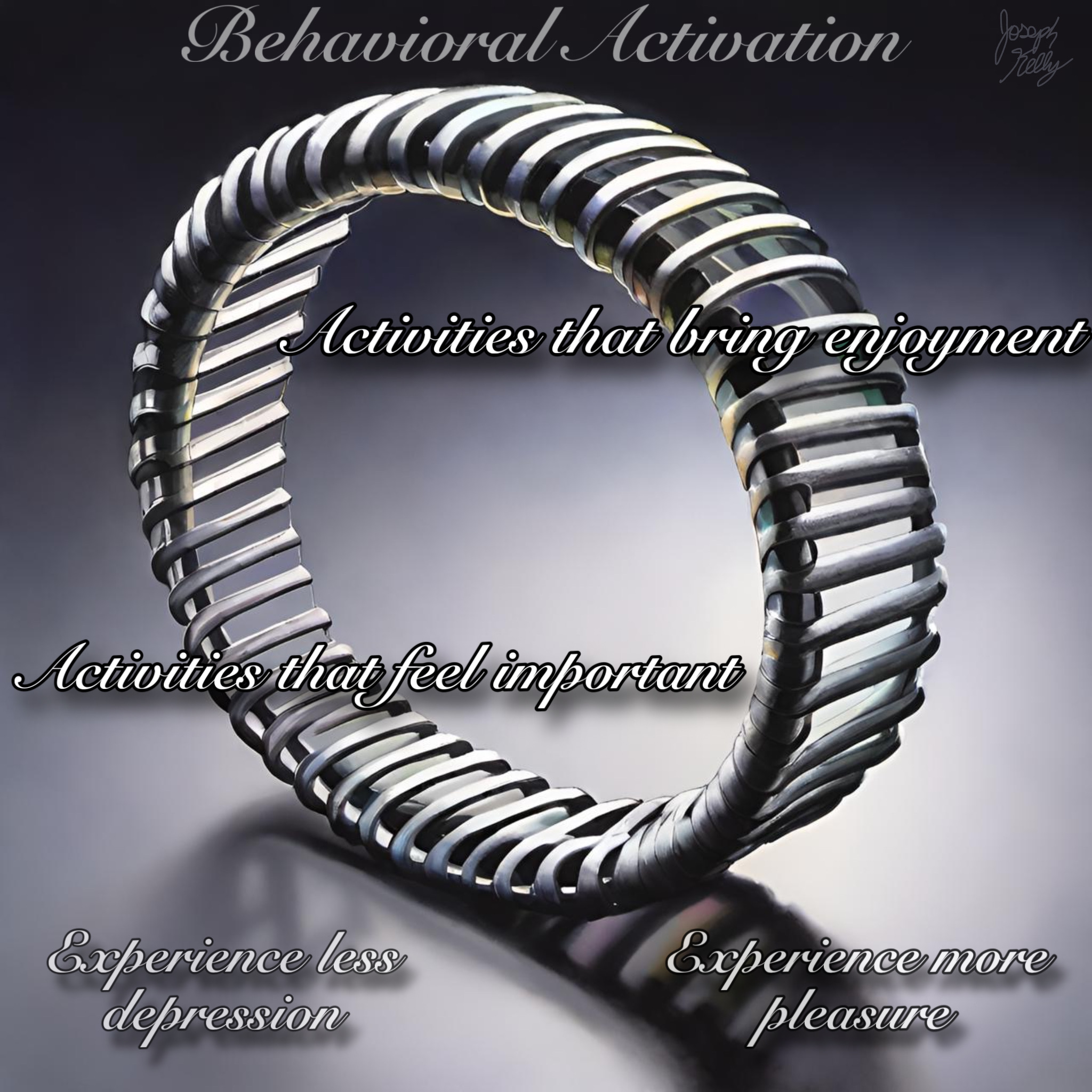
From a neurological perspective, Behavioral Activation works by activating the brain’s reward pathways. When we engage in meaningful activities, our brains release neurotransmitters like dopamine and serotonin, which enhance mood, motivation, and overall well-being. This creates a positive feedback loop: meaningful action leads to positive emotions, which in turn motivate more meaningful action.
Research has shown that this approach can literally rewire our brains, strengthening neural pathways associated with positive emotions and weakening those linked to negative thought patterns. This neuroplasticity gives us hope, no matter how stuck or disconnected we might feel, our brains retain the capacity to change and grow throughout our lives.
The Connection to Conscious Living
Conscious living isn’t about perfection or constant self-improvement. It’s about developing a deeper awareness of our choices, values, and the impact of our actions on ourselves and others. It’s about living with intention rather than simply reacting to circumstances. Behavioral Activation serves as a bridge between awareness and action, helping us translate insights into tangible changes in our daily lives.
When we apply Behavioral Activation principles to conscious living, we begin to see our daily activities not as mundane tasks to be completed, but as opportunities for connection, growth, and self-expression. Each moment becomes a chance to align our actions with our deepest values and aspirations.
Breaking Free from the Cycle of Disconnection
Many of us find ourselves trapped in what psychologists call the “cycle of disconnection.” This cycle begins when we gradually withdraw from activities that once brought us joy or meaning. Perhaps it starts with skipping that morning walk, avoiding social gatherings, or neglecting creative pursuits. As we withdraw, our mood and energy naturally decline, which makes it even harder to engage in meaningful activities.
This creates a downward spiral where inactivity breeds more inactivity, and we become increasingly disconnected from our authentic selves. Behavioral Activation offers a way out of this cycle by encouraging us to take small, manageable steps toward re-engagement, even when we don’t initially feel motivated to do so.
Cultivating Mindfulness Through Action
One of the most beautiful aspects of Behavioral Activation is how naturally it cultivates mindfulness. When we consciously choose our activities based on their alignment with our values and their potential to bring meaning to our lives, we naturally become more present and aware.
This isn’t the kind of mindfulness that requires sitting in meditation for hours (though that can certainly be valuable). Instead, it’s a practical, embodied mindfulness that emerges through conscious engagement with life itself. When we approach our daily activities with intention and awareness, even simple tasks like preparing a meal or tending to plants can become profound spiritual practices.
The Practice of Mindful Scheduling
One powerful technique within Behavioral Activation is what we might call “mindful scheduling.” This involves consciously planning activities that nourish different aspects of our being: physical, emotional, intellectual, social, and spiritual. Rather than filling our calendars with obligations, we begin to see our time as sacred space to be honored with meaningful choices.
This might involve scheduling time for creative expression, physical movement, connection with nature, meaningful conversations with loved ones, or service to others. The key is to approach this scheduling not as another form of rigid control, but as a loving act of self-care and conscious intention.
Reigniting Your Passion: A Systematic Approach
Passion isn’t something we simply stumble upon or wait to be struck by like lightning. It’s something we cultivate through conscious engagement with activities and experiences that resonate with our deepest values and interests. Behavioral Activation provides a systematic approach to rediscovering and nurturing these passions.
The Values Exploration Process
The journey begins with values exploration. Our values are like the North Star of our existence, they provide direction and meaning to our actions. Yet many of us have lost touch with our core values, having been conditioned by external expectations and societal pressures to prioritize things that don’t truly matter to us.
Take time to reflect deeply on what truly matters to you. Is it creativity? Connection? Adventure? Service? Justice? Beauty? There are no right or wrong answers here, only your authentic truth. Once you identify these core values, you can begin to evaluate your current activities and lifestyle choices. How well do they align with what you claim to value most?
The Activity Audit
Conduct an honest audit of how you currently spend your time. For one week, track your activities and rate them on two scales: how much energy they give you (energizing to draining) and how much meaning they provide (deeply meaningful to meaningless). This exercise often reveals surprising patterns.
You might discover that you’re spending significant time on activities that drain your energy and provide little meaning, while neglecting pursuits that could nourish your soul. This awareness becomes the foundation for conscious change.
“The cave you fear to enter holds the treasure you seek.” – Joseph Campbell
Creating Your Behavioral Activation Plan
Armed with clarity about your values and awareness of your current patterns, you’re ready to create a personalized Behavioral Activation plan. This isn’t about completely overhauling your life overnight, such dramatic changes are rarely sustainable. Instead, it’s about making gradual, intentional shifts that compound over time.
The Three-Category System
Organize potential activities into three categories:
Mastery Activities: These are pursuits that help you develop skills, learn new things, or accomplish meaningful goals. They might include learning a new language, taking up a musical instrument, or working on a creative project.
Pleasure Activities: These are simply enjoyable experiences that bring lightness and joy to your life. Think of activities like listening to music, spending time in nature, or sharing laughter with friends.
Connection Activities: These involve meaningful interaction with others or with something greater than yourself. This might include deep conversations, volunteer work, or spiritual practices.
A well-balanced life includes all three types of activities. Often, when we feel stuck or disconnected, it’s because we’ve overemphasized one category while neglecting the others.
The Gradual Integration Method
Begin by selecting one small activity from each category that you can realistically incorporate into your week. The key word here is small. If you want to develop a creative practice, don’t commit to painting for two hours every day. Instead, commit to spending fifteen minutes sketching three times a week.
This gradual approach serves multiple purposes. First, it makes change feel manageable rather than overwhelming. Second, it allows you to experience success, which builds momentum and confidence. Third, it gives you time to adjust and refine your approach based on what you learn about yourself in the process.
Overcoming Common Obstacles
As you begin implementing Behavioral Activation principles, you’ll likely encounter some internal resistance. This is completely normal and, in fact, valuable information about your current patterns and beliefs. Let’s explore some common obstacles and how to work with them skillfully.
The “I Don’t Feel Like It” Challenge
Perhaps the most common obstacle is the feeling that you’re not motivated or inspired to engage in meaningful activities. This is where Behavioral Activation’s core insight becomes crucial: motivation often follows action, not the other way around.
Instead of waiting to feel motivated, commit to taking action despite the lack of motivation. Start with the smallest possible step. If you’ve committed to a daily walk but don’t feel like it, commit to just putting on your walking shoes. Often, this tiny action creates enough momentum to carry you forward.
The Perfectionism Trap
Many people get stuck because they believe they need to do things perfectly or not at all. This all-or-nothing thinking is antithetical to conscious living and sustainable change. Embrace the concept of “good enough” and focus on consistency rather than perfection.
If you miss a day or don’t perform an activity as well as you’d hoped, treat this as valuable information rather than failure. What can you learn from this experience? How can you adjust your approach to make success more likely in the future?
Time Constraints and Competing Priorities
In our busy world, finding time for meaningful activities can feel impossible. This is where conscious prioritization becomes essential. Remember that saying yes to meaningful activities often requires saying no to less important ones.
Consider conducting a “time audit” similar to your activity audit. Where are you spending time that doesn’t align with your values? Can some of these activities be eliminated or reduced? Sometimes we need to create space for the meaningful by releasing the meaningless.
The Ripple Effects of Conscious Action
As you begin to live more consciously through Behavioral Activation, you’ll likely notice effects that extend far beyond the specific activities you’re engaging in. This is because authentic, values-based action creates ripple effects throughout all areas of life.
Enhanced Self-Awareness
Regular engagement in meaningful activities serves as a mirror, reflecting back to you information about your preferences, strengths, and areas for growth. You begin to develop a clearer sense of who you are and what you want from life.
This enhanced self-awareness becomes a foundation for making better decisions in all areas of life, from relationships and career choices to how you spend your leisure time and what goals you pursue.
Improved Emotional Regulation
When you’re regularly engaged in activities that bring meaning and satisfaction, you develop greater emotional resilience. You’re less likely to be derailed by temporary setbacks or negative emotions because you have a foundation of positive experiences to draw upon.
Moreover, the mindfulness that naturally develops through conscious action helps you observe your emotions without being overwhelmed by them. You learn to see emotions as information rather than directives, allowing you to respond rather than react.
Stronger Relationships
Interestingly, as you become more aligned with your authentic self through conscious action, your relationships often improve as well. When you’re living from a place of authenticity and fulfillment, you bring more presence and genuine care to your interactions with others.
Additionally, as you prioritize connection activities, you naturally deepen your relationships and create more meaningful bonds with others who share your values and interests.
Advanced Practices for Sustained Growth
Once you’ve established a foundation of conscious action through basic Behavioral Activation principles, you can explore more advanced practices that deepen your growth and expand your capacity for conscious living.
The Weekly Review Ritual
Develop a weekly practice of reviewing your activities and their effects on your well-being. This isn’t about judgment or harsh self-criticism, but rather about cultivating the awareness that allows for continuous refinement and growth.
Ask yourself questions like: Which activities brought me the most energy and satisfaction this week? Which activities felt draining or meaningless? What patterns do I notice in my mood and motivation? What adjustments might serve me well in the coming week?
Seasonal Adaptation
Just as nature cycles through seasons, our inner lives also have natural rhythms and cycles. Learn to adapt your Behavioral Activation plan to honor these natural fluctuations rather than fighting against them.
During periods of high energy and inspiration, you might take on more challenging mastery activities or social commitments. During quieter periods, you might focus more on restoration, reflection, and gentle pleasure activities. This seasonal approach prevents burnout and honors the natural ebb and flow of life energy.
Values Evolution
Recognize that your values may evolve over time, and this is not only normal but healthy. What mattered deeply to you five years ago might feel less relevant today, while new values may have emerged. Regularly revisit your values and adjust your activities accordingly.
This evolution isn’t about being inconsistent or wishy-washy. Rather, it reflects your growing self-awareness and changing life circumstances. Honoring this evolution is part of living consciously.
Integration with Daily Life: Making It Sustainable
The ultimate goal of Behavioral Activation for conscious living isn’t to create a perfect life or to eliminate all challenges and difficulties. Rather, it’s to develop the skills and awareness that allow you to navigate life’s inevitable ups and downs while staying connected to what matters most to you.
The Micro-Moment Practice
Not every meaningful moment needs to be scheduled or planned. Learn to recognize and create micro-moments of conscious living throughout your day. This might be taking three conscious breaths before answering your phone, expressing genuine gratitude to someone who serves you, or pausing to really notice the beauty of a sunset.
These small moments of consciousness accumulate over time, creating a richer, more connected experience of life even within the constraints of busy schedules and mundane responsibilities.
Community and Support
While Behavioral Activation is ultimately a personal practice, it’s greatly enhanced by community and support. Consider sharing your journey with trusted friends or family members who can offer encouragement and accountability. You might even form a small group of like-minded individuals who meet regularly to discuss their experiences and support each other’s growth.
Remember, conscious living isn’t a solitary pursuit. We’re all interconnected, and our individual growth contributes to the well-being of the whole. By living more consciously, you’re not only transforming your own life but also contributing to a more conscious, compassionate world.
The Journey Continues: Embracing Lifelong Growth
Behavioral Activation for conscious living isn’t a destination you arrive at, but rather a way of traveling through life. It’s an ongoing practice of choosing awareness over unconsciousness, intention over habit, and authenticity over conformity. Some days will feel easier than others, and that’s perfectly natural.
What matters most is not perfection, but persistence, the willingness to keep choosing consciousness, keep aligning your actions with your values, and keep nurturing that inner spark that makes you uniquely you. Each small choice you make in favor of conscious living is a victory, a moment of freedom, and a contribution to your own flourishing and that of the world around you.
Your inner spark was never truly dimmed, it was simply waiting for you to remember its presence and create the conditions for it to shine. Through the systematic, compassionate approach of Behavioral Activation, you have the tools to not only reignite this spark but to tend it lovingly as it grows into the full flame of conscious, authentic living.
The life you truly desire isn’t something you have to wait for or hope will happen to you. It’s something you can begin creating right now, one conscious choice at a time. Your authentic self is calling, it’s time to answer with action, awareness, and the courage to live the life that’s truly yours.