
In the grand theater of human existence, we are born into a world of predetermined roles, scripted expectations, and well-worn paths. From our earliest moments, we are taught to follow the lines already drawn, to color within the boundaries established by generations before us, and to find our place within the existing order. Yet somewhere within the depths of our being lies a profound yearning, a whisper that calls us toward something more authentic, more alive, more wholly our own.
This is the call to consciousness, the invitation to step away from the comfortable conformity of societal norms and embark upon the most profound journey we can undertake: the journey of self-directed transformation. It is here, in the space between who we have been conditioned to be and who we truly are, that we discover our capacity to become the authors of our own growth and spiritual evolution.
The Architecture of Conformity
Before we can understand the path to consciousness, we must first examine the intricate architecture of conformity that shapes our daily existence. Conformity is not merely about following rules or adhering to social expectations, it runs far deeper, into the very foundations of how we construct our sense of self and our place in the world.
The Invisible Chains of Social Conditioning
From the moment we draw our first breath, we are immersed in a complex web of social conditioning. Our families, educational institutions, peer groups, and media all contribute to a collective narrative about who we should be, what we should value, and how we should live. These influences are so pervasive and persistent that they become the invisible architecture of our psyche.
Consider the subtle ways in which we learn to suppress our authentic impulses in favor of social acceptability. The child who learns not to ask too many questions becomes the adult who stops questioning altogether. The teenager who conforms to peer pressure to avoid rejection becomes the professional who compromises their values to fit in. These patterns, established early and reinforced consistently, create what psychologists call learned helplessness, a state where we believe we have no choice but to follow the prescribed path.
The tragedy is not that these social structures exist, they serve important functions in creating cohesive communities and shared meaning. The tragedy lies in our unconscious surrender to them, our failure to recognize that we have the power to choose which aspects serve our growth and which ones limit our potential.
The Comfort of the Known
Conformity offers us something profoundly valuable: certainty. In a world filled with uncertainty and complexity, the predetermined path provides clear direction, predictable outcomes, and the comfort of belonging. When we follow established patterns, we know what to expect, how others will respond to us, and where we fit within the social hierarchy.
This comfort, however, comes at a cost. In choosing the safety of the known, we often sacrifice the vitality of authentic self-expression. We trade our unique voice for the harmony of the chorus, our individual vision for the clarity of collective sight. The result is a life that may appear successful by external standards but feels hollow or incomplete from within.
The Danish philosopher Søren Kierkegaard captured this dilemma beautifully when he wrote about the concept of despair, not as dramatic anguish, but as the quiet desperation of a life unlived, of potential unexpressed, of authenticity unexplored. This is the price of unconscious conformity: the gradual erosion of our connection to our deepest self.
The Awakening: Recognizing the Call to Consciousness
The journey from conformity to consciousness rarely begins with a dramatic revelation. More often, it starts with a subtle sense of dis-ease, a growing awareness that something essential is missing from our carefully constructed lives. This awakening can manifest in various ways, through a persistent feeling of emptiness despite external success, through a series of life events that challenge our assumptions, or through an encounter with ideas or experiences that expand our sense of what’s possible.
The Dark Night of the Soul
For many, the call to consciousness emerges from what mystics have long called the dark night of the soul, periods of profound questioning, loss, or disillusionment that force us to examine the foundations of our existence. These experiences, though painful, serve as catalysts for transformation by dissolving the illusions that have kept us trapped in unconscious patterns.
The loss of a job that defined our identity, the end of a relationship we thought would last forever, the confrontation with mortality through illness or aging, these experiences strip away the external scaffolding of our lives and force us to confront fundamental questions: Who am I without these roles and relationships? What do I truly value? What gives my life meaning beyond social recognition and material success?
While these moments of crisis can feel overwhelming, they also represent profound opportunities for growth. In the darkness of uncertainty, we are forced to develop new sources of light, our own inner wisdom, our capacity for resilience, our ability to find meaning in the midst of chaos.
The Whisper of Authenticity
Sometimes the call to consciousness comes not through crisis but through a quieter recognition, the growing awareness of a gap between our public persona and our private experience, between what we say we value and how we actually live, between our potential and our current reality.
This whisper of authenticity might manifest as a persistent curiosity about paths not taken, a longing to express parts of ourselves that have remained hidden, or a deep knowing that we are capable of more than we have allowed ourselves to explore. It is the voice within that questions not just what we are doing, but why we are doing it, and whether it truly serves our highest good.
The Terrain of Self-Directed Transformation
Once we recognize the call to consciousness, we face the profound question of how to respond. Self-directed transformation is not about rejecting all social influence or living in isolation, it is about developing the capacity to consciously choose which influences we allow to shape us and which aspects of our conditioning serve our authentic growth.
Developing the Observer Self
The foundation of self-directed transformation lies in developing what mindfulness practitioners call the observer self, the part of our consciousness that can step back and witness our thoughts, emotions, and behavioral patterns without being completely identified with them. This capacity for self-observation is revolutionary because it creates space between who we are and what we think, feel, or do in any given moment.
When we develop the observer self, we begin to notice the automatic patterns that have been running our lives. We see how we react predictably to certain triggers, how we fall into familiar roles in relationships, how we make decisions based on fear or conditioning rather than conscious choice. This awareness is the first step toward freedom, we cannot change what we cannot see.
The practice of developing the observer self requires patience and compassion. We are not trying to judge or eliminate aspects of ourselves, but simply to see them clearly. Like a scientist studying their own behavior, we approach ourselves with curiosity rather than criticism, understanding rather than condemnation.
Questioning the Inherited Story
Every family, culture, and society tells stories about reality, about what it means to be human, what constitutes success, how relationships should work, what we should fear, and what we should strive for. These stories, absorbed unconsciously throughout our development, become the lens through which we interpret all experience.
Self-directed transformation requires us to question these inherited stories with the same rigor we might apply to any other belief system. We ask: Is this story serving my growth and well-being? Does it reflect my direct experience of reality, or is it something I’ve accepted without examination? What would my life look like if I operated from a different set of assumptions?
This process of questioning is not about becoming cynical or rejecting all received wisdom. Rather, it’s about developing discernment, the ability to distinguish between wisdom that has been tested by our own experience and beliefs we have adopted simply because they were presented as truth by authority figures.
Reclaiming Our Creative Power
Perhaps the most profound aspect of self-directed transformation is the recognition that we are not passive recipients of life but active creators of our experience. This doesn’t mean we control all external circumstances, much of what happens to us remains beyond our direct influence. However, we always retain the power to choose how we respond to those circumstances and what meaning we make of our experiences.
This creative power extends to every aspect of our lives. We can consciously choose the beliefs that guide our decisions, the relationships we cultivate, the work we pursue, and the values that inform our actions. We can rewrite the internal narratives that have been limiting our potential and experiment with new ways of being in the world.
The key word here is experiment. Self-directed transformation is not about finding the one right way to live but about approaching life as a laboratory for conscious evolution. We try new approaches, observe the results, adjust our course based on what we learn, and continue evolving.

The Practices of Conscious Evolution
While the journey of self-directed transformation is ultimately unique to each individual, there are certain practices and principles that support this process of conscious evolution. These practices help us develop the skills necessary to navigate the terrain between conformity and consciousness.
Cultivating Inner Stillness
In our hyperconnected world, the practice of cultivating inner stillness has become both more challenging and more essential than ever. The constant stream of information, stimulation, and social comparison creates a kind of psychological noise that makes it difficult to hear our own inner voice.
Regular practices of meditation, contemplation, or simply sitting in silence help us develop the capacity to tune out external noise and tune into our inner wisdom. In stillness, we can distinguish between the voice of our authentic self and the voices of conditioning, fear, and social expectation.
This doesn’t necessarily require formal meditation practices, though they can be helpful. The key is creating regular spaces of quiet in our lives, times when we’re not consuming information, solving problems, or engaging with others, but simply being present with ourselves and our experience.
Embracing Uncertainty as a Teacher
One of the greatest obstacles to self-directed transformation is our discomfort with uncertainty. Conformity offers the illusion of certainty, if we follow the prescribed path, we believe we know what to expect. Consciousness, on the other hand, requires us to step into the unknown and trust our ability to navigate whatever we encounter.
Learning to embrace uncertainty as a teacher rather than an enemy is crucial for conscious evolution. Uncertainty teaches us to rely on our inner resources rather than external validation. It develops our capacity for resilience, creativity, and adaptability. Most importantly, it keeps us open to possibilities we might never have considered from within the safety of conformity.
This doesn’t mean recklessly abandoning all structure or planning, but rather holding our plans lightly and remaining open to course corrections based on new information or emerging opportunities.
The Practice of Authentic Expression
Self-directed transformation requires us to gradually shift from performing acceptable versions of ourselves to expressing our authentic nature. This is perhaps one of the most challenging aspects of the journey because authentic expression often feels risky, it makes us vulnerable to judgment, rejection, or misunderstanding.
The practice begins small, with moments of honest self-expression in low-stakes situations. We might share an unpopular opinion with a trusted friend, pursue a creative interest that doesn’t fit our professional image, or simply speak more truthfully about our inner experience.
As we build confidence in our ability to handle the responses to our authenticity, we can gradually expand the range and depth of our authentic expression. We discover that while not everyone will understand or appreciate our true self, those who do will form much deeper and more meaningful connections with us.
Navigating the Challenges of Conscious Transformation
The path from conformity to consciousness is not without its challenges. Understanding these potential obstacles can help us navigate them with greater skill and resilience.
The Loneliness of the Path
One of the most difficult aspects of conscious transformation is the potential for loneliness. As we begin to question conventional wisdom and follow our own inner guidance, we may find ourselves increasingly out of step with the people around us. Old friendships may feel superficial or constraining, family relationships may become more complex, and we may struggle to find others who understand or support our journey.
This loneliness, while painful, is often a necessary part of the process. It creates space for us to develop a relationship with ourselves that isn’t mediated by others’ expectations or approval. It forces us to find sources of meaning and fulfillment that don’t depend on external validation.
The antidote to this loneliness is not to abandon our journey but to seek out communities of like-minded individuals who are also committed to conscious growth. These communities, whether found online, in spiritual or philosophical groups, or through shared interests and values, provide the support and understanding necessary to sustain us through the more challenging phases of transformation.
The Fear of Making the Wrong Choice
When we step away from conventional paths, we lose the comfort of knowing that our choices are socially approved and statistically likely to lead to recognized forms of success. This can create anxiety about making the wrong choice, what if we pursue our passion and fail financially? What if we prioritize relationships over career advancement and regret it later? What if our spiritual seeking leads us away from family or cultural traditions we later wish we had preserved?
The key to navigating this fear is to reframe our relationship with choice itself. Instead of seeking the one right choice, we can focus on making choices that align with our values and understanding in each moment, knowing that we can adjust our course as we learn and grow.
Every choice teaches us something, and there is wisdom to be gained from any path we walk consciously. The greatest tragedy is not making a choice that doesn’t work out perfectly, but failing to make any authentic choices at all.
The Temptation to Spiritual Materialism
As we embark on the journey of conscious transformation, there is a subtle temptation to turn our spiritual or personal growth into another form of ego enhancement. We may become attached to our identity as someone who is conscious or evolved, creating new forms of comparison and judgment.
This phenomenon, which Buddhist teacher Chögyam Trungpa called spiritual materialism, represents a particularly insidious form of unconsciousness because it masquerades as consciousness. We may accumulate spiritual experiences, techniques, or insights the same way we once accumulated material possessions or social status, using them to construct a more sophisticated but equally limiting identity.
The antidote to spiritual materialism is humility and the recognition that consciousness is not a destination to reach but a way of being to embody moment by moment. True consciousness is characterized not by a sense of superiority but by an increasing capacity for compassion, wonder, and connection with all aspects of life.
The Fruits of Conscious Living
While the journey of self-directed transformation can be challenging, it also offers profound rewards that make the difficulties worthwhile. These rewards are not external achievements but internal transformations that fundamentally alter our experience of being alive.
Authentic Power
Perhaps the most significant fruit of conscious living is the development of what we might call authentic power, the capacity to respond to life’s challenges from our deepest wisdom rather than our conditioned reactions. This is different from power over others or external circumstances; it is power with ourselves and our experience.
Authentic power manifests as the ability to remain centered in the face of chaos, to speak our truth even when it’s uncomfortable, to make decisions based on our values rather than our fears, and to respond to others’ behavior without losing our own sense of equilibrium.
This power is not aggressive or dominating but quietly confident and deeply grounded. It allows us to influence our environment through the quality of our presence rather than through manipulation or force.
Deep Fulfillment
When we align our lives with our authentic nature and deepest values, we experience a quality of fulfillment that is qualitatively different from the satisfaction that comes from external achievements. This deep fulfillment is not dependent on circumstances or other people’s approval, it arises from the simple fact of being true to ourselves.
This doesn’t mean that life becomes easy or that we no longer experience challenges, sadness, or disappointment. Rather, it means that even difficult experiences feel meaningful when they are part of a life we have consciously chosen rather than unconsciously drifted into.
Expanded Capacity for Love and Connection
Perhaps surprisingly, the journey toward greater individuation and self-direction actually increases our capacity for genuine intimacy and connection with others. When we are not performing roles or meeting expectations, we become available for more authentic relationships.
As we develop compassion for our own struggles and imperfections, we naturally extend that compassion to others. As we become less dependent on others’ approval, we become more capable of offering unconditional acceptance. As we free ourselves from the need to control or change others, we become more present to them as they actually are.
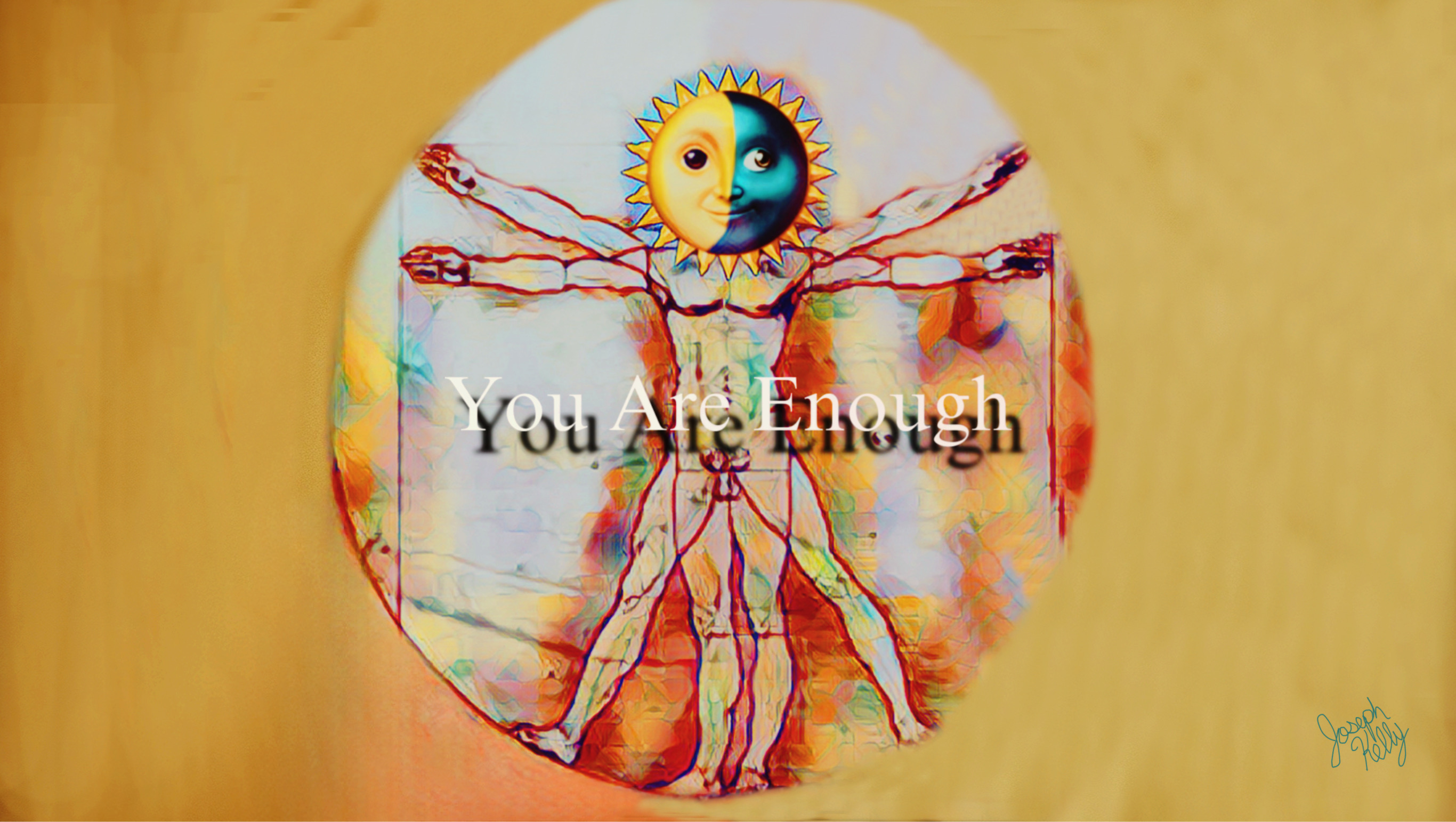
Living as the Author of Your Own Story
Ultimately, the journey from conformity to consciousness is about reclaiming our role as the author of our own story. This doesn’t mean writing a perfect story without conflict or challenge, but rather taking conscious responsibility for how we navigate the plot twists, develop our character, and choose the themes that give our story meaning.
Writing with Intention
As the author of our own story, we learn to write with intention rather than simply reacting to whatever circumstances arise. We develop the capacity to pause before responding, to consider what kind of character we want to be in each situation, and to choose actions that align with the larger narrative we’re trying to create.
This intentional authorship extends to all aspects of our lives. We can consciously choose the relationships we cultivate, ensuring they support our growth and well-being. We can select work that aligns with our values and utilizes our unique gifts. We can create daily practices that nourish our body, mind, and spirit. We can pursue learning and experiences that expand our understanding and capacity.
Embracing the Full Spectrum
Being the author of our own story doesn’t mean writing a narrative that includes only positive experiences and outcomes. A great story includes the full spectrum of human experience, joy and sorrow, success and failure, connection and solitude, certainty and mystery.
The difference is that we approach all experiences as opportunities for growth and learning rather than as random events that happen to us. We understand that the challenges in our story are not obstacles to our happiness but ingredients in our development. We learn to find meaning in difficulty and to extract wisdom from every chapter of our experience.
Continuous Revision
Perhaps most importantly, we recognize that being the author of our own story is an ongoing process rather than a one-time decision. Like any good writer, we are constantly revising our work, adjusting the direction of our narrative based on new insights, changing circumstances, and evolving values.
This requires a kind of creative flexibility, the ability to hold our current story lightly while remaining committed to the process of conscious authorship. We may discover that chapters we thought were endings were actually transitions, that characters we dismissed as unimportant play crucial roles in our development, or that plot lines we thought we had abandoned contain important themes that resurface later.
The Ripple Effects of Conscious Transformation
As we embark on this journey of self-directed transformation, we discover that our personal evolution has effects that extend far beyond our individual lives. Consciousness, it turns out, is contagious in the most beautiful way.
Modeling Possibility
When we live authentically and consciously, we become a living example of what is possible for others. Without preaching or proselytizing, we demonstrate through our very existence that there are alternatives to unconscious conformity, that it is possible to create a meaningful life outside conventional prescriptions.
This modeling is particularly powerful because it doesn’t require others to adopt our specific choices or beliefs. Instead, it inspires them to consider their own possibilities, to question their own assumptions, and to explore their own paths toward greater consciousness and authenticity.
Creating Conscious Communities
As more individuals embark on journeys of conscious transformation, natural communities begin to form around shared values of authenticity, growth, and mutual support. These communities become laboratories for new ways of living, working, and relating that honor both individual autonomy and collective well-being.
These conscious communities don’t necessarily reject all aspects of conventional society, but they do create alternative models that demonstrate how social structures can support rather than suppress individual authenticity and growth.
Contributing to Collective Evolution
On the largest scale, each individual’s journey toward consciousness contributes to what some thinkers call the collective evolution of human consciousness. As more people develop the capacity for self-reflection, emotional intelligence, and authentic expression, these capacities become more available to humanity as a whole.
This is not a mystical concept but a practical reality. The accumulated wisdom of conscious individuals becomes part of our shared human knowledge. The alternative social structures they create become options for future generations. The expanded capacity for compassion and understanding they develop contributes to our collective ability to address the complex challenges facing our world.
In this sense, the journey from conformity to consciousness is not just a personal endeavor but a contribution to the larger human story, a story in which each of us has the opportunity to play the role of conscious co-author in the evolution of our species.
The path from conformity to consciousness is neither easy nor straightforward, but it is perhaps the most important journey we can undertake. It is the journey that transforms us from passive recipients of cultural conditioning into active participants in our own becoming. It is the path that leads from a life lived according to others’ expectations to a life that authentically expresses our deepest nature and highest potential.
The invitation is always present, waiting for us to accept it. The only question is: Are you ready to become the author of your own transformation?