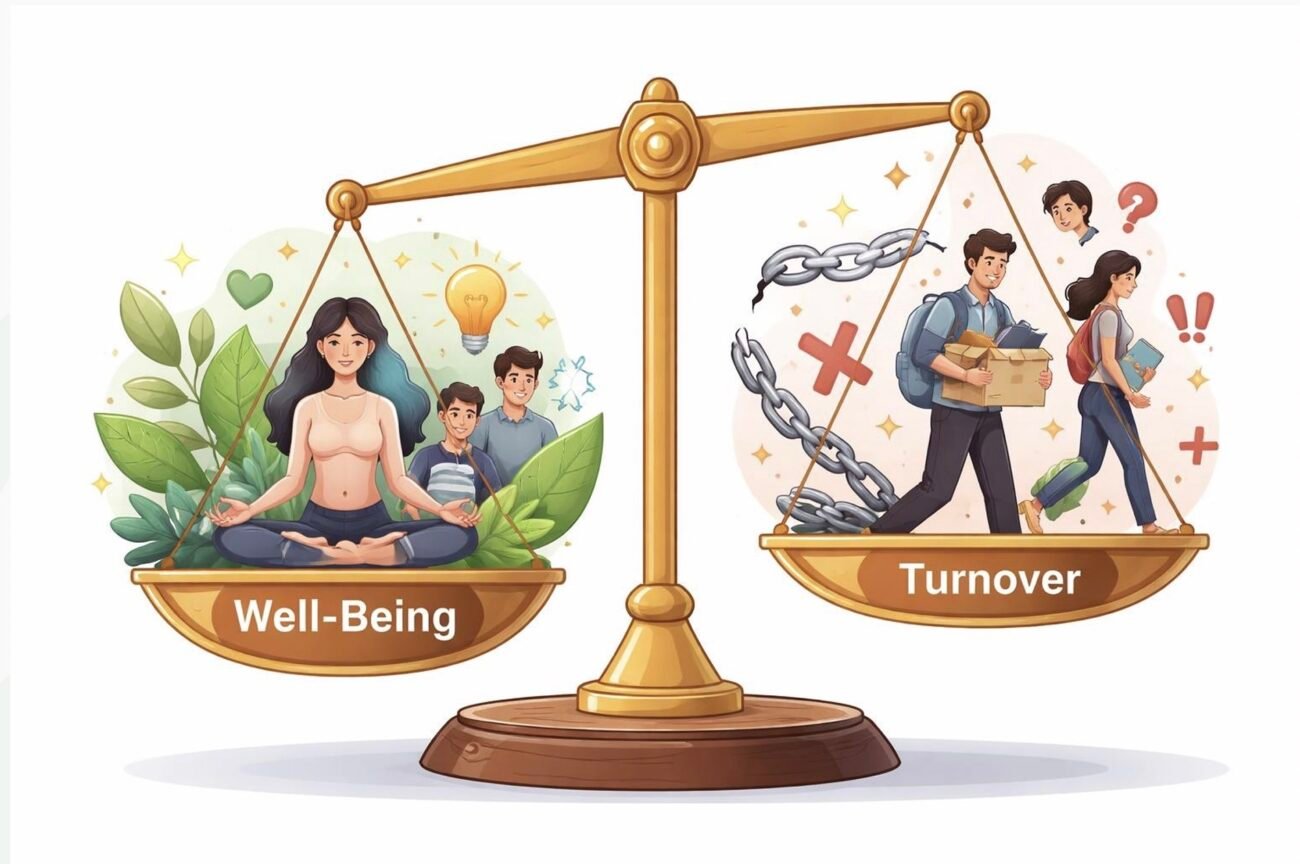
Before you can begin to heal from burnout, you have to know what you’re up against. The first, most crucial step is to accurately diagnose the problem. This isn't about simply feeling tired; it's about recognizing a specific psychological pattern that changes your entire relationship with work.
This process involves getting brutally honest with yourself, creating some immediate breathing room to think, and then, step-by-step, rebuilding your professional life on a more sustainable foundation.
Recognizing the Signs of Workplace Burnout
Burnout is far more than just the exhaustion that follows a tough week. Think of it as a slow erosion of your spirit—a state of profound psychological depletion that hollows you out, leaving you cynical and disconnected from the work you once cared about.
It’s not a personal failure or a sign of weakness. From a psychological standpoint, burnout is a completely natural human response to chronic, unmanaged stress. It’s a signal that there’s a deep disconnect between you and your work environment. Philosophically, it can be viewed as an existential crisis where one's daily actions are no longer aligned with their sense of purpose. If you’ve ever felt that creeping Sunday night dread or found yourself staring blankly at your screen, you’re far from alone. A staggering 76% of employees now report experiencing burnout at least some of the time, as detailed in recent employee burnout statistics.
The Three Pillars of Burnout and How to Spot Them
Burnout isn’t a single feeling. It's a syndrome built on three distinct, yet interconnected, pillars as defined by researchers like Christina Maslach. Understanding which of these are most prominent for you is the key to targeted recovery.
The table below breaks down these three dimensions, providing common symptoms and a key question to ask yourself for each.
| Pillar of Burnout | Common Symptoms | Self-Reflection Question |
|---|---|---|
| Exhaustion | A deep-seated physical and emotional fatigue. Feeling like you have nothing left to give. Finding even simple tasks draining. | "Do I feel drained and depleted even before the workday begins?" |
| Cynicism & Depersonalization | A growing sense of detachment and negativity toward your job, your colleagues, and the company's mission. Feeling disconnected or irritable. | "Have I become cynical or critical about my work and the people I work with?" |
| Inefficacy & Reduced Accomplishment | The feeling that you're no longer effective. Doubting your skills and feeling a sense of failure, even when your performance is fine. | "Do I doubt my ability to make a meaningful impact in my role?" |
Take a moment to genuinely reflect on these questions. Seeing your experience laid out like this can be the first real step toward taking back control.
The progression is often predictable. It starts with feeling completely drained, which then leads you to pull back and become detached as a defense mechanism. Finally, that detachment makes you feel ineffective and question your own competence.

Recognizing this cycle early is your best defense. You can interrupt the pattern before it becomes deeply entrenched in your psyche and your career.
Why Burnout Happens: A Deeper Look
So, what’s actually driving these feelings? Burnout is rarely just about working long hours. It’s almost always the result of a chronic mismatch between you and your work in one or more fundamental ways. From a philosophical perspective, it can be seen as an existential crisis where your daily actions are in direct conflict with your core need for meaning and purpose.
Burnout is not a personal failure but a systemic problem. It points to a misalignment between your deep-seated needs for autonomy, competence, and connection, and what your work environment actually provides.
Think about it from a psychological lens, using Self-Determination Theory. A lack of autonomy—that feeling of having no real control over your schedule or decisions—is a powerful recipe for helplessness and exhaustion. An absence of meaningful recognition erodes your sense of competence until you wonder if your effort matters. And a toxic or unsupportive work community attacks your need for relatedness, leading to cynicism and emotional withdrawal.
By assessing not just if you feel these symptoms but why they’re showing up, you shift from being a passive victim of burnout to an active agent in your own recovery. This self-awareness is the foundation for everything that comes next.
When you’re deep in the throes of burnout, trying to fix everything at once is a recipe for more overwhelm. The immediate goal isn’t a grand solution. It's simply to stop the freefall. This is your psychological first-aid kit, filled with concrete steps to carve out some breathing room and interrupt the vicious cycle of stress.

The core principle here is what psychologists call Strategic Disengagement. This has nothing to do with giving up or checking out. Instead, it’s a conscious, deliberate technique to mentally detach from the relentless flood of work stressors. It’s about giving your nervous system a chance to downshift from its constant state of high alert, a process known as parasympathetic activation.
Master the Micro-Pause to Interrupt Stress
The kind of stress that fuels burnout rarely arrives in one massive wave. It’s an accumulation, a death by a thousand papercuts—hundreds of small, taxing moments that build up throughout the day. To fight back, you need a way to break that chain reaction in real time. The 5-Minute Mindful Pause is a simple, research-backed habit designed to do exactly that.
This isn't some esoteric quest for perfect Zen. It’s a practical reset button, grounded in mindfulness-based stress reduction (MBSR) techniques.
- Set a timer for five minutes. Find a small gap in your day—between meetings, before tackling a difficult email, or just when you feel that familiar knot of tension tightening in your chest.
- Close your eyes and find your breath. Don't try to change it. Just notice the physical sensation of the air moving in and out of your body. This is a classic anchor in mindfulness practice.
- Do a quick body scan. Mentally check in with your jaw, your shoulders, your hands. Are they clenched? Consciously invite them to release. This builds interoceptive awareness, your ability to sense your internal state.
Think of these short pauses as circuit breakers. They stop minor stressors from compounding into the all-consuming dread that defines the burnout experience. This is how you start to learn how to overcome burnout at work—one moment at a time.
Reclaim Your Evenings with a Digital Shutdown
One of the biggest culprits behind modern burnout is the complete erosion of the boundary between work and life. The "always-on" culture, driven by a constant barrage of notifications, prevents our minds from ever truly logging off to rest and recover. An End-of-Day Digital Shutdown is a non-negotiable step toward taking back your personal time.
The physical act of ending your workday creates a powerful psychological boundary. This ritual signals to your brain that it’s safe to disengage and is just as crucial as any morning routine you have for starting the day right.
This is far more than just closing your laptop. It’s a definitive ritual that marks the transition from your professional self back to your personal self. This has a philosophical dimension, reinforcing the idea that you are more than just your work—a person with multiple facets and needs.
- Declare a hard stop time. Pick a time, like 5:30 PM, and put it in your work calendar as a recurring event. Treat it like an important meeting.
- Silence all work notifications. Go into your phone’s settings and disable alerts for email, Slack, Teams, or whatever platform your company uses.
- Put your work away. If you can, physically move your work items out of sight. Close the laptop and put it in a bag. Put the bag in another room. This "out of sight, out of mind" tactic is a behavioral psychology trick that really works.
This small act of reclaiming control can feel incredibly empowering. It reinforces the critical idea that your time is your own—a necessary philosophical shift away from the sense of helplessness that so often accompanies burnout. For more tools to help you build these new habits, you can find a number of free resources on my website.
Temporarily Reduce Your Workload
When you’re running on fumes, you simply can't carry a full tank’s worth of work. Asking for a temporary reduction in non-essential tasks isn’t a sign of weakness; it’s a strategic move to create the space you need to recover. The entire key to this is framing the conversation with your manager constructively.
Instead of a vague statement like, "I'm feeling burned out," which can sound like a complaint without a solution, anchor the conversation in performance and proactive problem-solving.
Here’s a script you can adapt for that conversation:
"I’m fully committed to delivering high-quality work, and I've noticed recently that it's been a challenge to maintain my usual standard of focus. To make sure my core responsibilities (like Project X and Project Y) continue to get the full attention they deserve, I was hoping we could discuss temporarily deprioritizing or reassigning some of my non-essential tasks for the next couple of weeks? I think this would allow me to reset and get back to full capacity quickly."
This approach positions you as a responsible, self-aware employee who is actively managing their performance. It’s a practical step that provides immediate relief, creating the critical breathing room needed to begin the deeper work of recovery.
Reconnecting with Your Values and Setting Boundaries
Once you’ve managed to create some breathing room, the real work begins. We have to turn our focus inward. Burnout does more than just drain your battery; it creates a profound sense of depersonalization, a chasm that opens between you and your work, and often, between you and your truest self. You start to feel like an interchangeable part in a machine, just going through motions that feel hollow and disconnected from anything you actually care about.
This part of the recovery process is about rebuilding that connection. Philosophically, this is akin to a journey of self-rediscovery. I’ve come to see burnout as an existential ache, a deep misalignment between your daily actions and your core values. It's the psychological pain that comes from systematically being denied the chance to be yourself. To truly heal, you have to rediscover what gives you a sense of meaning and then start deliberately reshaping your life around it.
Identify Your Core Value Mismatches
That feeling of being completely "over it" is almost always a symptom of a deeper conflict. It’s the friction that occurs when there's a major gap between what you value—things like creativity, autonomy, or feeling part of a community—and what your job actually asks of you day in and day out. Pinpointing this mismatch is the first real step toward resolving the tension.
Here’s a powerful exercise I use with my clients, rooted in narrative therapy. Take a moment to reflect on two distinct experiences at work: one where you felt completely alive and engaged, and another where you felt cynical and utterly drained.
- What was happening during that fulfilling moment? Were you deep in a complex problem, mentoring a colleague, or bringing a new idea to life?
- And what about the draining one? Were you bogged down in bureaucracy, navigating pointless conflict, or stuck in a loop of repetitive, mindless tasks?
The feelings you had in those moments are direct signposts to your values. The positive experience likely lit up values like "impact" or "mastery." The negative one probably trampled all over values like "efficiency" or "harmony." Once you see this pattern, you can name exactly where your work environment is grinding against your inner compass.
The Art and Science of Setting Boundaries
With a clearer sense of what you're trying to protect, you can start building healthy boundaries. Boundaries aren't about becoming difficult or putting up walls. They are the practical, daily expression of self-respect. Think of them as the rules of engagement you set to protect your mental, emotional, and physical energy.
A boundary isn’t just about leaving work at 5 p.m. It’s about protecting your focus during the day. It's about preserving your emotional capacity. It's about drawing a clean line between your work identity and your personal self. A massive body of research shows that a lack of control is a primary driver of burnout, and setting boundaries is the most direct way to start taking that control back.
Boundaries are the invisible lines you draw around yourself to protect your well-being. They communicate to others that you value your energy and time, and in doing so, they teach others how to treat you.
Of course, this is where most of us get stuck. The fear of being seen as uncommitted, not a team player, or just plain unhelpful can make saying "no" feel almost impossible. The critical mindset shift is this: a well-placed "no" is actually a powerful "yes"—a "yes" to your own well-being and to the quality of the work that truly matters. This aligns with the Stoic philosophy of focusing only on what is within your control.
Practical Scripts for Graceful Boundary Setting
The good news is that saying no doesn't have to be a big, confrontational event. The most effective boundaries are communicated calmly, clearly, and often with a focus on shared goals. Having a few scripts in your back pocket makes it infinitely easier to respond with grace when you're put on the spot.
Here are a few real-world scenarios and scripts you can adapt:
When asked to take on a new project you simply don't have time for:
"Thanks for thinking of me for this. Right now, my focus is locked on Project A and B, which are my top priorities. To do this new project justice, I'd have to de-prioritize one of them. Could we talk about which one would be best to shift?"
(This reframes the conversation from a refusal to a strategic choice about resource allocation.)When a colleague pops by for "just five minutes" while you're in deep work:
"I'm right in the middle of something and need to stay focused, but I'd be happy to help. Can I find you in about an hour when I'm at a good stopping point?"
(This validates their request while protecting your most productive time.)When a non-urgent email or message arrives after hours:
Simply don't answer it until the next workday. Your silence is the boundary. This is a subtle but powerful way to train people to respect your time without you ever having to say a word.
By consistently taking these small actions, you start to rewire not just your own habits but also the expectations of everyone around you. This isn't about a quick fix; it's about building the foundation for a sustainable, resilient career—one that actually honors who you are.
Building a Burnout-Proof Career
Getting through burnout is one thing. Ensuring it never happens again is another. This is where you shift from merely surviving to consciously designing a professional life that's not just sustainable, but deeply meaningful. You stop being a victim of circumstance and become the architect of your own resilience.

The psychological shift here is profound. Instead of just reacting to stress, you start intentionally shaping a role that genuinely nourishes you. This isn't about finding some mythical "perfect job." It's about perfecting your relationship with the job you have, embodying the philosophical concept of amor fati—loving one's fate and finding purpose in the present reality.
The Art of Job Crafting
One of the most powerful concepts from organizational psychology for this is Job Crafting. It’s the practice of proactively reshaping your role to better fit your values, strengths, and passions. This is how you reclaim a sense of control and find purpose in your day-to-day, making you far more resistant to the pressures that fuel burnout.
Job crafting isn't a massive overhaul. It focuses on small adjustments in three key domains, as defined by researchers Amy Wrzesniewski and Jane E. Dutton:
- Task Crafting: This means modifying the type or number of tasks you take on. If you love mentoring, you might volunteer to guide a new hire, even if it’s not in your official job description.
- Relational Crafting: This involves being intentional about who you interact with. You could actively seek out projects with colleagues who inspire you or find ways to minimize contact with those who drain your energy.
- Cognitive Crafting: This is about reframing how you perceive your work. A hospital administrator might shift their perspective from "managing paperwork" to "creating the organizational backbone that enables life-saving care."
This isn’t about waiting for permission. It’s about making small, self-initiated changes that infuse your work with more meaning. Start by looking at your week. Can you find a way to spend just 10% more time on tasks that energize you and 10% less on those that deplete you?
Build Your Skills, Build Your Freedom
Learning new skills is one of the most effective, yet overlooked, strategies for preventing future burnout. Psychologically, building competence is a direct antidote to the feelings of helplessness and inefficacy that define the burnout experience. Every new skill you acquire is tangible proof of your own capacity for growth, a concept known as self-efficacy.
This is about much more than just buffing up your resume. It’s about creating options. The more capable you are, the less "stuck" you feel in a draining role, giving you the leverage to pivot or redefine your career path.
Skill development is a direct investment in your own autonomy. Each new ability is another tool in your kit, giving you more power to shape your career path and negotiate for roles that truly fit you.
This isn't just a theory; it's a clear demand from the modern workforce. Recent research shows that 53% of workers are hungry for more skill-building opportunities, and 52% want more flexible work arrangements—both factors are directly tied to lower burnout rates. This connection is no coincidence; empowerment and growth are potent antidotes to exhaustion. You can see the full report on employee burnout and productivity to explore this trend further.
Start small. Dedicate just an hour or two each week to learning something that genuinely interests you, whether it's a new software, a public speaking course, or a project management framework. Structured programs can provide a clear path forward; our own Pathways of Light courses are designed specifically to help you build these kinds of practical skills for well-being. This proactive investment in yourself is how you build a truly fireproof career.
How to Talk to Your Manager About Burnout
Of all the steps in recovering from burnout, this is often the one that feels the most daunting. Broaching the topic of burnout with your manager can feel incredibly vulnerable, even risky. We worry we’ll be seen as incapable, not a team player, or simply complaining.
Yet, this conversation represents a profound shift. It’s the moment you stop passively enduring a situation and begin actively co-creating a solution. This isn't about filing a complaint; it's about initiating a strategic partnership with your manager to protect your long-term value to the team. Philosophically, you're moving from a position of seeing your job as something that happens to you to seeing it as a professional relationship you can help shape.
Frame the Conversation Constructively
How you open this discussion will set the tone for everything that follows. The goal is to frame the issue as a shared challenge—one that affects both your well-being and the team's success—and to position yourself as a proactive problem-solver.
Starting with purely emotional or accusatory statements like, "I'm completely burned out," or "This workload is impossible," can immediately put a manager on the defensive. Psychologically, this triggers a threat response rather than a collaborative one.
A more strategic approach is to lead with a focus on performance and sustainability.
Instead of saying, "I'm burned out," try this: "To ensure I can maintain my performance and continue delivering high-quality work long-term, I'd like to discuss how we might adjust my current workload and priorities."
This phrasing immediately accomplishes several things. It signals that your commitment to quality work is unwavering, and it shows you're thinking strategically about your contribution. It transforms the conversation from a personal crisis into a professional puzzle you can solve together.
Prepare Your Case with Objective Data
To ground the conversation in objective reality rather than just subjective feelings, you need data. Documenting your workload isn't about building a case against your manager; it’s about providing clear, undeniable context that makes your request for change reasonable and actionable.
Your feelings of exhaustion are completely valid. But pairing those feelings with concrete facts makes them impossible to dismiss. Before you have the meeting, take a week or two to keep a simple log.
- Track Your Hours: Be precise. Note when you start, when you finish, and any significant work you do after hours or on weekends.
- List Major Tasks: Document the key projects and responsibilities you’re juggling simultaneously.
- Identify Bottlenecks: Where are the sticking points? Pinpoint specific projects or processes where you’re consistently overloaded or blocked.
- Note the Impact: Connect the work to its tangible effects. For instance, "Worked 12 hours on Project X, which led to a tension headache and difficulty sleeping." This connects workload to somatic symptoms, a key psychological indicator.
Here’s a straightforward way to structure this log:
| Date | Key Projects Worked On | Total Hours | After-Hours Work | Specific Impact/Symptom Noted |
|---|---|---|---|---|
| Monday | Project A, Client B Onboarding | 10.5 | 1.5 hrs on emails | Difficulty concentrating in the evening |
| Tuesday | Team Report, Project C edits | 11 | 2 hrs on revisions | Skipped lunch, felt irritable and tired |
When you present this, you’re no longer just saying you feel overworked. You’re able to say, "As you can see from my log, my project load is consistently pushing my work week over 50 hours. I don't believe this pace is sustainable for me to keep producing my best work."
This is far more powerful. It gives your manager tangible information to work with, making a solution feel not just necessary, but achievable. This kind of prepared, collaborative discussion is a cornerstone of learning how to overcome burnout at work for good.
Your Burnout Questions, Answered
As you start navigating your way back from the brink, it’s natural for practical questions to pop up. Let's tackle some of the most common ones I hear, reinforcing the core principles of recovery so you can move forward with confidence.
How Do I Know if It's Just Stress or Actual Burnout?
The line between stress and burnout can feel incredibly blurry, but the psychological difference is profound. I often explain it like this: stress is a state of over-engagement, while burnout is a state of disengagement.
Think of it this way. Stress feels like you’re drowning in responsibilities, but you still believe you can swim to shore if you just paddle hard enough. There’s a frantic energy, a sense of urgency.
Burnout is what happens when you’ve run out of water to drown in. It’s a feeling of being completely dried up. The hope that you can "just get through it" is gone, replaced by a deep emotional exhaustion, cynicism, and a sense that nothing you do matters. That’s the real distinction.
Can I Overcome Burnout Without Quitting My Job?
Absolutely. In fact, for many, it's the more powerful path. Learning how to overcome burnout at work is rarely about escaping to a new job; it’s about fundamentally changing your relationship with your current one.
It’s a common misconception that a new environment is the only fix. But true, lasting recovery comes from rebuilding your sense of agency and finding meaning right where you are.
The strategies we've discussed—setting firm boundaries, "job crafting" to better align your role with your strengths, and communicating your capacity to your manager—are all designed for in-place recovery. By focusing on the variables you can control, you can often reignite that professional spark and reshape your current role into something sustainable, and even fulfilling.
How Can I Prevent Burnout from Happening Again?
Prevention isn’t a one-time immunization shot; it’s the ongoing cultivation of sustainable, self-aware habits. This means fiercely protecting your non-work time for recovery and regularly checking in with your personal values to make sure your work isn't drifting out of alignment.
Prevention is an ongoing practice of self-awareness and proactive adjustments. The goal is to build a fireproof career, not just to put out the current fire.
This also looks like making continuous small tweaks to your role to keep it engaging and maintaining an open dialogue with your manager about your workload and capacity. But perhaps the most important shift is philosophical: recognizing that your well-being isn't a luxury you earn after the work is done. It is the non-negotiable prerequisite for performing at your best.
What Is the Link Between Engagement and Burnout?
This is a fascinating and counterintuitive point. You'd think high engagement would be a shield against burnout, but the data tells a different story. A 2026 survey revealed that while a staggering 82% of professionals felt burned out, a paradoxical 88% also reported being highly engaged in their work.
You can dig into the specifics in the HR Brew report on this phenomenon.
What this tells us is that passion and engagement, without the right support structures, can actually accelerate burnout. Highly engaged people are often the ones who push themselves the hardest, making them more vulnerable in environments that lack autonomy, psychological safety, or a manageable workload.
The solution isn't to become disengaged. It’s to channel that powerful energy into a healthy, sustainable structure. It proves that passion is an incredible asset, but it must be protected by strong personal boundaries and a supportive culture, or it will become the very fuel that burns you out.
At Joseph Kelly, we're dedicated to providing research-backed tools that turn insight into action. Our platform blends practical philosophy and applied psychology to help you build a life of purpose and resilience. Discover structured courses, creative media, and our flagship LifeCraft software to support your journey of intentional growth at https://josephkelly.net.